How to Buy Your First Sauna: A Complete Checklist
Buying your first sauna? This checklist covers type, size, heater, wood, ventilation, budget and installation so you avoid the costly first-timer mistakes.
Buying your first sauna is exciting and a little daunting — there’s more to it than picking a good-looking cabin. The people who end up happiest are the ones who get the fundamentals right: the correct heater, real ventilation, honest budgeting, and a type that fits their space and life. This checklist walks through the decisions in the order that matters.
The short answer
To buy the right sauna, work through it in order: indoor or outdoor → type → size → heater → wood → ventilation → budget and installation. The shell is the easy, visible part; the heater, airflow and install are what actually determine how good — and how safe — your sauna is.
1. Indoor or outdoor?
This shapes everything else. An indoor sauna (a spare room, a basement, a bathroom conversion) is usually electric, simpler to run, and available year-round without stepping outside. An outdoor sauna opens up wood-burning options and a proper cold-plunge-in-the-snow ritual, but adds foundations, weatherproofing and possibly permits.
2. Type
Two forks here:
- Traditional or infrared? If you want real heat and löyly, go traditional — see infrared vs. traditional.
- Barrel or cabin? For outdoor traditional saunas, weigh efficiency against comfort in barrel vs. cabin.
3. Size and capacity
Match the room to how many people will realistically use it at once, and to the space you have. Bigger is not free: a larger room needs a bigger heater and more energy every session. Allow comfortable bench space per person, and don’t oversize “just in case.”
| Typical use | Rough capacity | Notes |
|---|---|---|
| Solo / couple | 2–3 people | Compact, efficient, cheaper to run |
| Family | 4 people | The common home sweet spot |
| Entertaining | 5–6+ people | Bigger heater, higher running cost |
4. Heater — get this right
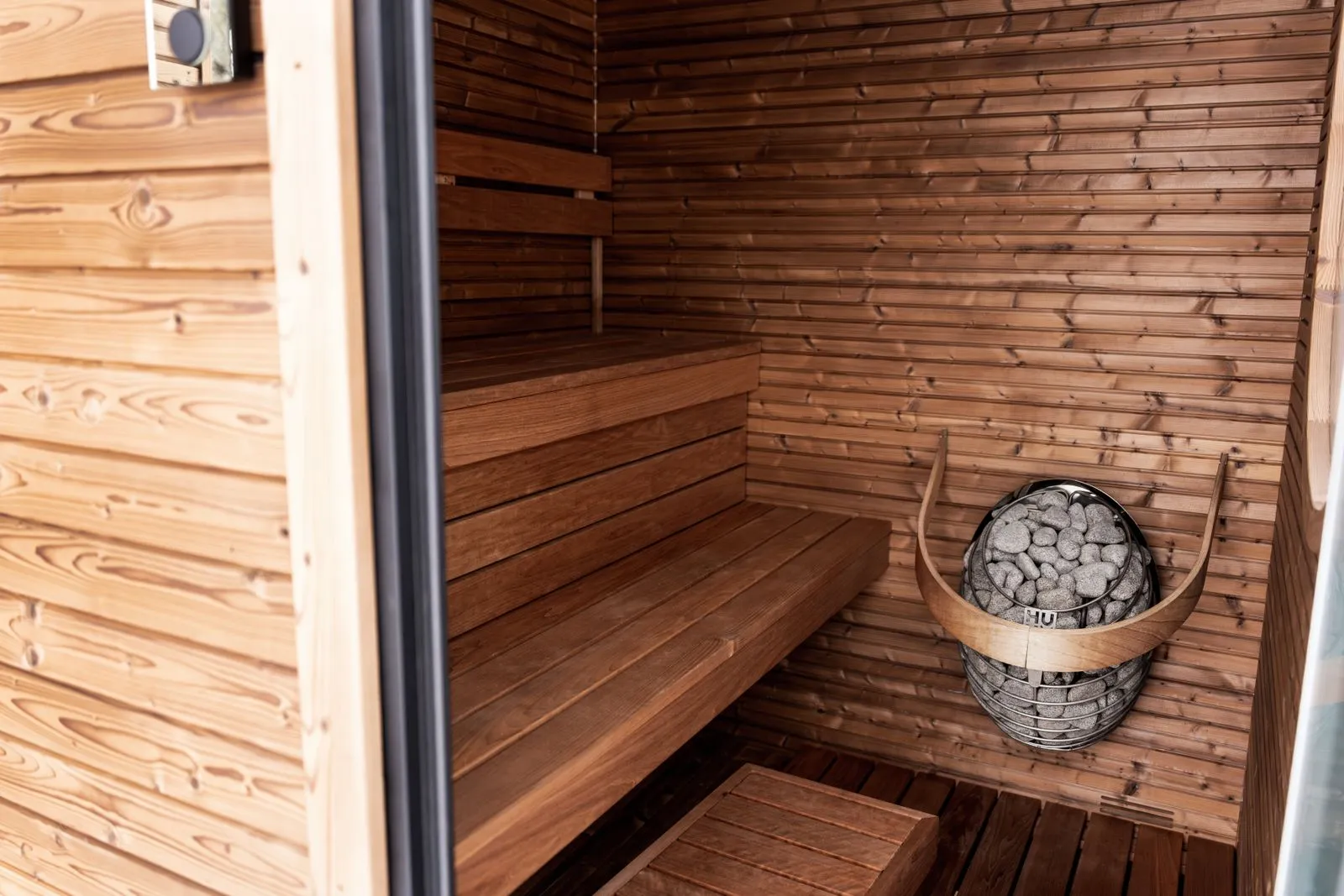
Decide electric vs. wood-burning based on your site and power, then size the specific model correctly. Prefer models with generous stone capacity for softer löyly.
5. Wood quality
Check what the cabin and, especially, the benches are made of. Look for stable, cool-to-the-touch, low-resin woods — cedar, aspen or alder — and avoid resinous pine where skin makes contact. Our interior wood guide covers the choices. Bench wood matters most, since that’s what you sit on.
6. Ventilation
Confirm the sauna has proper intake and exhaust ventilation — many budget kits skimp here, and no heater can compensate for a stuffy, stagnant room. This is a genuine make-or-break detail that’s easy to overlook on a spec sheet.
7. Budget and installation
Price the whole project, not just the box:
- The sauna or kit itself.
- The heater (if not included) and stones.
- Installation — assembly, and for electric heaters a licensed electrician and possibly a dedicated circuit.
- Foundation for outdoor units.
- Permits where required.
Our Canadian sauna cost guide breaks down realistic ranges and the extras first-timers forget.
Prefab or custom?
The short version
Get the type and size to fit your space, the heater sized correctly, decent wood, real ventilation, and a budget that includes installation — in that order — and your first sauna will be a lasting pleasure rather than a lesson. Everything else is refinement.
Frequently asked questions
What should I consider before buying a sauna?
The main decisions are indoor vs outdoor, sauna type (traditional or infrared; barrel or cabin), size and capacity, heater type and size, wood quality, ventilation, your budget including installation, and any permits or wiring your space needs.
What size sauna should I buy?
Match capacity to how many people will typically use it, plus the space you have. Allow comfortable bench room per person, and remember that a bigger room needs a bigger, costlier heater and more energy to run.
Should a first-time buyer get a prefab or custom sauna?
Prefab kits and pre-built units are the easiest and most predictable route for a first sauna — they arrive sized, with a matched heater and instructions. Custom builds offer more control but need more knowledge and coordination.
What's the most common mistake when buying a sauna?
Focusing on the cabin and ignoring the fundamentals — buying the wrong heater size, skimping on ventilation, or forgetting installation and wiring costs. The shell is the easy part; the heater, airflow and install make or break the experience.
Do I need an electrician to install a sauna?
For an electric heater, yes — the connection must be done by a licensed electrician to code, and larger heaters may need a dedicated circuit or panel capacity. Budget for this from the start.
How much should I budget for a sauna?
It ranges widely by type and size, from smaller prefab units to large custom builds, plus installation and wiring. See our Canadian cost guide for realistic ranges and the extras first-timers forget.