How Much Does a Sauna Cost in Canada? A Realistic Breakdown
Sauna costs in Canada span from compact prefab units to large custom builds. Here's a realistic breakdown of the purchase, heater, install and running costs.
“How much does a sauna cost?” has no single answer, because “sauna” covers everything from a plug-in infrared cabinet to a custom cedar cottage with a wood stove. What we can do is map the cost structure clearly — the purchase, the heater, the installation, and the running cost — so you can build a realistic budget for your situation and avoid the surprises that catch first-time buyers.
The short answer
A sauna’s total cost has four parts: the unit (compact/infrared at the low end, mid-range prefab barrels and cabins in the middle, custom builds at the top), the heater and stones, the installation (electrical, chimney, foundation, permits), and the ongoing running cost. Installation is the part most people underestimate.
The four cost buckets
Think in buckets rather than a single number:
| Cost bucket | What’s in it |
|---|---|
| The unit | The cabin/barrel/kit or the infrared cabinet |
| Heater + stones | Often separate on traditional saunas |
| Installation | Electrician, chimney, foundation, assembly, permits |
| Running cost | Electricity or firewood, per session |
Where you land depends on choices: indoor vs outdoor, infrared vs traditional, prefab vs custom, and electric vs wood.
1. The unit
Roughly from least to most expensive:
- Infrared cabins and small indoor prefab units sit at the affordable end — compact, plug-in-simple, lower heat.
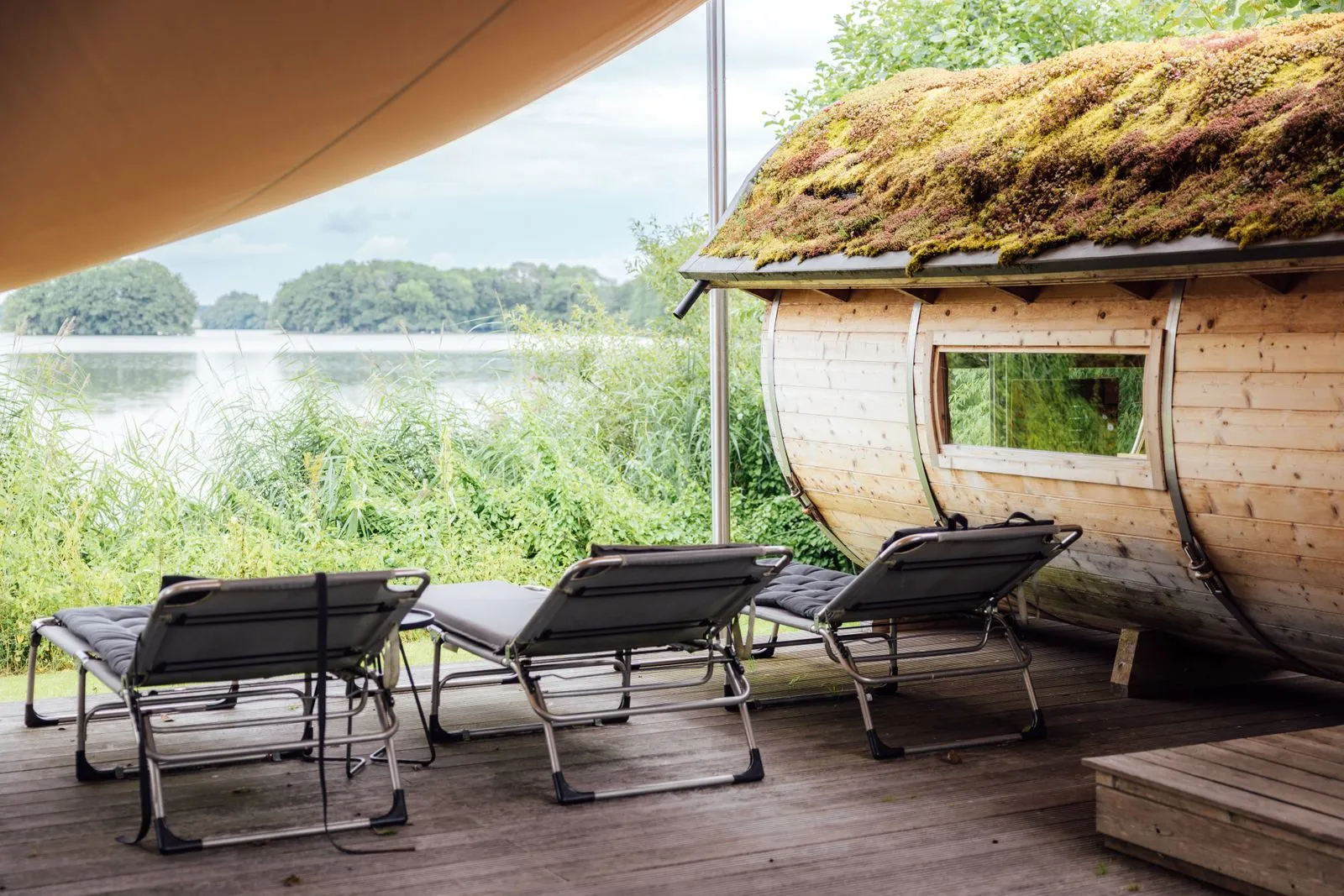
- Mid-range prefab barrels and cabins are the popular middle — a complete traditional sauna for a backyard.
- Large or custom builds — bespoke cedar rooms, big cabins, premium finishes — sit at the top.
The type decisions drive this bucket more than anything.
2. Heater and stones
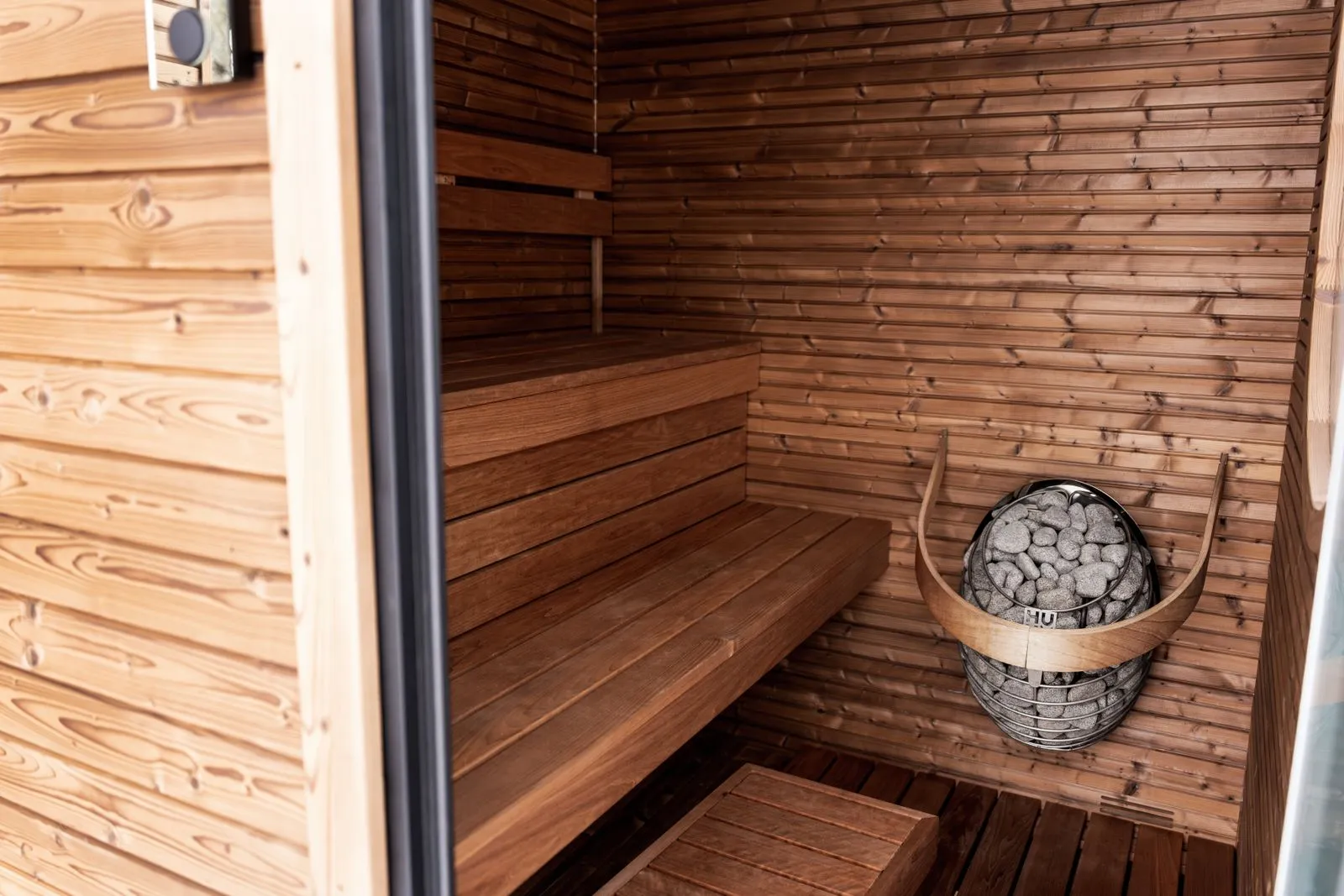
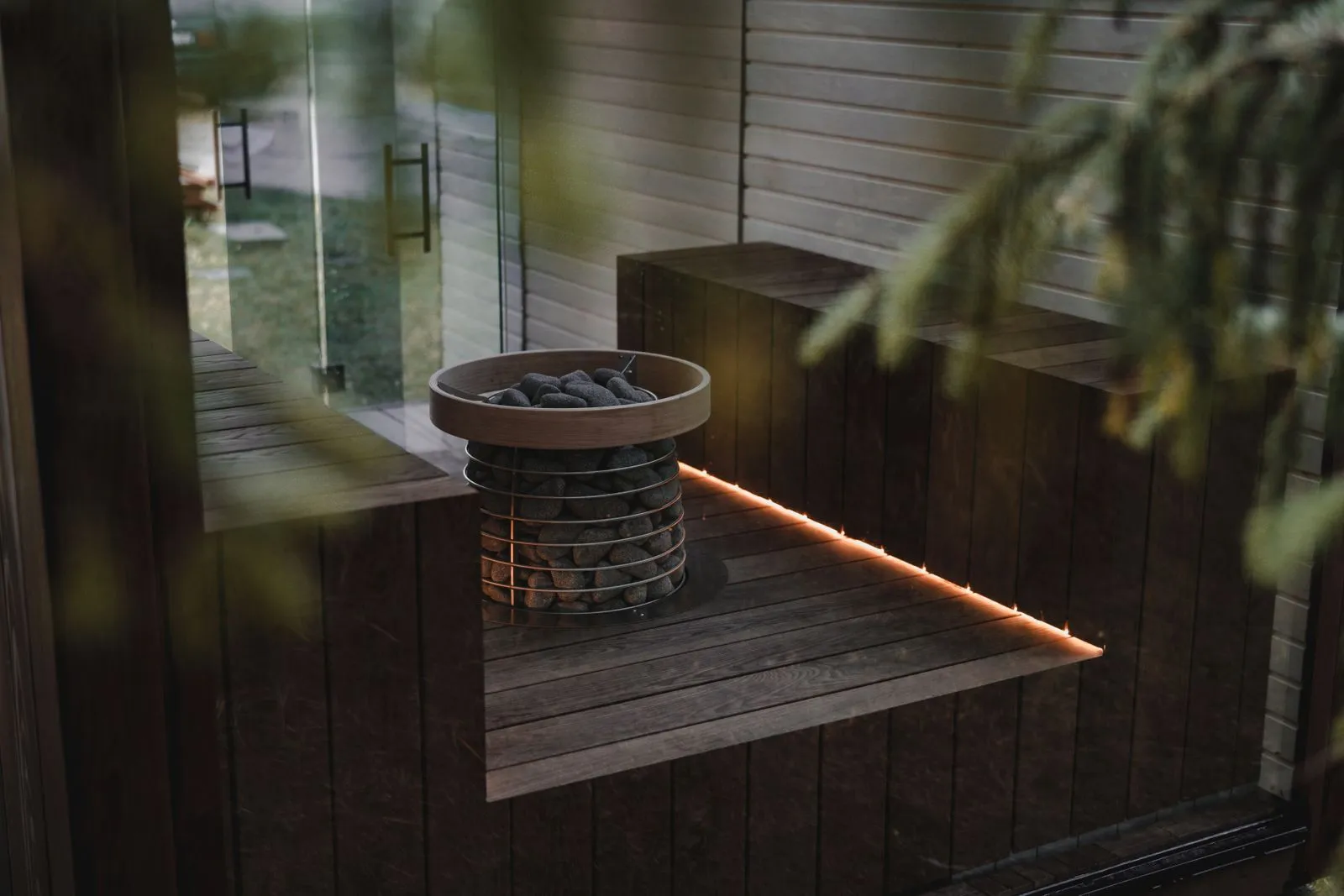
On traditional saunas the heater is often priced separately. An electric heater sized to your room, or a wood stove with its chimney kit, plus a load of stones, all belong here. Bigger rooms need bigger heaters — another reason not to oversize the room.
3. Installation — the hidden cost
Budget explicitly for:
- Electrical: licensed electrician; dedicated 240 V circuit; possible panel upgrade.
- Chimney (wood): insulated chimney, installed to code.
- Foundation (outdoor): gravel pad, piers, or slab.
- Permits: structure and/or electrical, per your municipality.
4. Running cost
Your ongoing cost is driven by three things: the heater size, how long you heat, and your local energy price. The controllable factors are within your reach:
- Insulate well. Good insulation cuts heat-up time and heat loss — it pays you back every session.
- Size the heater correctly. An oversized heater wastes energy for worse heat.
- Heat only when needed. You don’t leave a sauna running; you heat it before use.
A well-insulated, correctly-sized sauna used a few times a week is genuinely modest to run. A leaky, oversized one costs more and delivers less.
Building a realistic budget
The bottom line
A sauna can be an affordable infrared cabinet or a five-figure custom build — the range is enormous, and that’s genuinely good news, because it means there’s a real sauna at most budgets. The key is to cost the whole project honestly, spend where it counts (heater sizing, insulation, ventilation), and avoid the false economies that raise your bills or shorten the sauna’s life. Start with our how to buy a sauna checklist, and if you’re going outdoors, the outdoor buying guide covers the site-specific costs in detail.
Frequently asked questions
How much does a sauna cost in Canada?
It spans a wide range: compact indoor or infrared units at the lower end, mid-range prefab barrels and cabins in the middle, and large custom builds at the top — before installation. Always add the heater (if separate), electrical or foundation work, and permits to the sticker price.
What adds the most to sauna cost beyond the unit?
Installation is the big hidden cost: electrical work by a licensed electrician (and possibly a panel or circuit upgrade) for an electric heater, or a chimney for a wood stove, plus a foundation for outdoor units and any permit fees.
Are saunas expensive to run?
Running cost depends on the heater size, how long you heat, and your local energy price. A well-insulated, correctly-sized sauna used a few times a week is modest to run; a poorly insulated or oversized one costs more for worse heat.
Is an infrared sauna cheaper than a traditional one?
Infrared cabins are often lower in upfront and running cost because they heat to a lower temperature, but they don't offer löyly or high heat. Compare the experience, not just the price.
Does insulation affect sauna running cost?
Significantly. Good insulation cuts heat-up time and heat loss, so the heater runs less. Cheaping out on insulation raises your energy bill every single session.
Should I budget for a permit and electrician?
Yes. In most of Canada, electrical connection of a sauna heater must be done by a licensed electrician, and many municipalities require permits for the structure and/or electrical work. Build these into your budget from the start.