Sauna Interior Wood: Cedar, Aspen, Alder & Hemlock Compared
The best sauna woods stay cool to the touch, resist moisture and don't drip resin. Compare cedar, aspen, alder and hemlock for walls and benches.
The wood you touch is the sauna. It’s the surface your skin rests against at 90°C, the smell that hits you when you open the door, and the material that has to survive years of heat and humidity without warping, dripping or burning you. Choosing it well is part comfort, part building science.
The short answer
The best sauna interior woods are low-density, low-resin species that stay cool to the touch: western red cedar (aromatic, stable, rot-resistant), and aspen or alder (pale, near-scentless, ideal for benches). Avoid resinous pine and spruce where skin makes contact, and never seal interior sauna wood with a film finish.
What makes a wood right for a sauna
Four properties matter:
- Low thermal conductivity — so the surface stays cool enough to sit on even when the air is scorching.
- Low resin content — resinous woods weep hot, sticky sap and heat up at the knots.
- Moisture resistance — the wood must handle repeated humidity without rot or excessive movement.
- No splintering — it’s against bare skin, so it needs to stay smooth.
The main choices
| Wood | Scent | Best for | Notes |
|---|---|---|---|
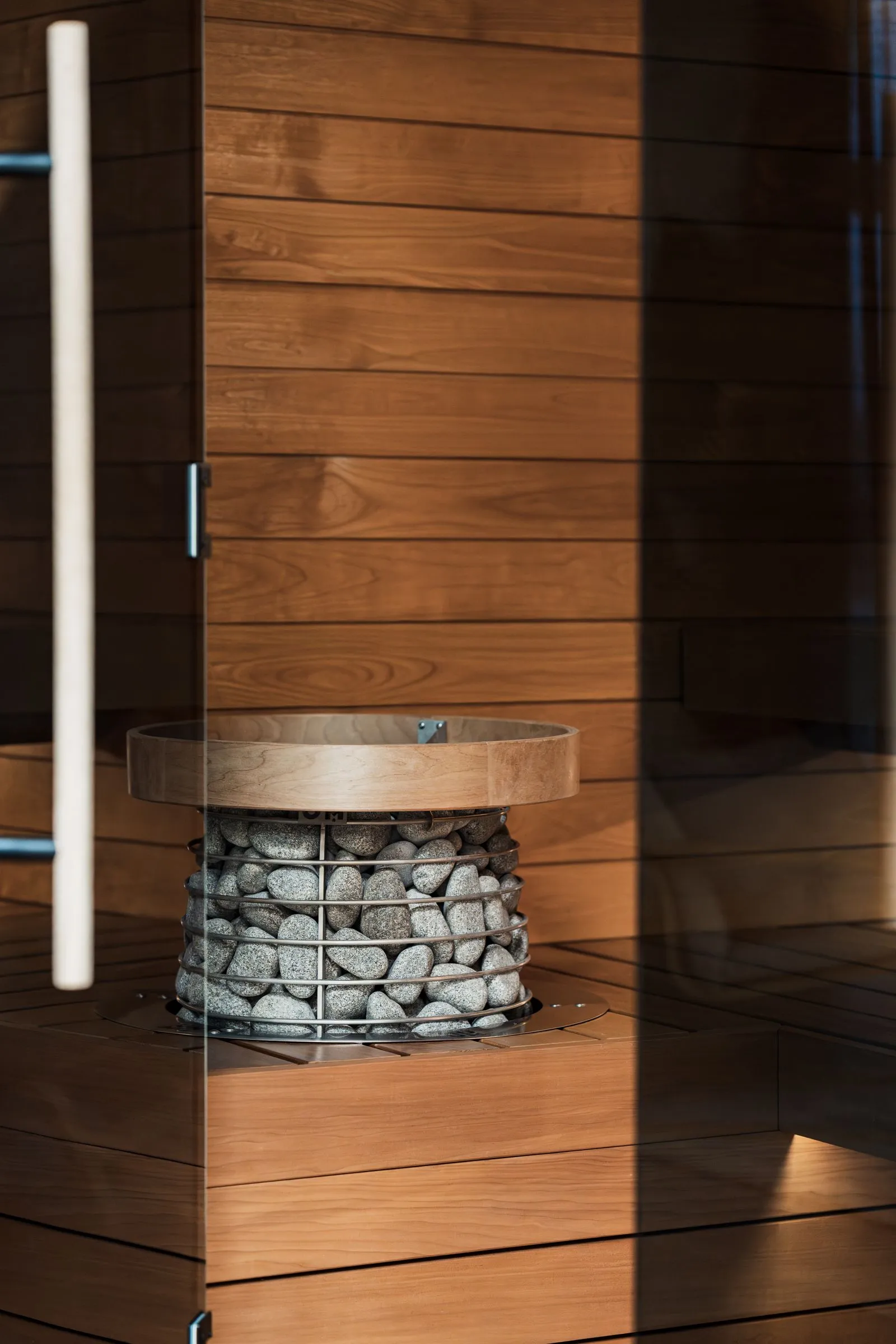
| Western red cedar | Aromatic | Walls & benches | The classic: stable, rot-resistant, warm tone |
| Aspen | Almost none | Benches, walls | Pale, cool, hypoallergenic-friendly |
| Alder | Mild, pleasant | Benches, walls | Warm reddish tone, cool to touch |
| Hemlock | Very mild | Walls | Economical, even grain, light colour |
| Thermally-modified aspen | Low | Premium interiors & exteriors | Extra-stable and rot-resistant |
| Pine / spruce | Resinous | Exterior / non-contact only | Can weep sap; hot knots |
Cedar — the default
Western red cedar earns its popularity: it’s dimensionally stable, naturally rot-resistant, and its aroma is, for many, the smell of sauna itself. The one caveat is that scent — a minority of people find cedar’s aromatic oils irritating.
Aspen and alder — the bench specialists
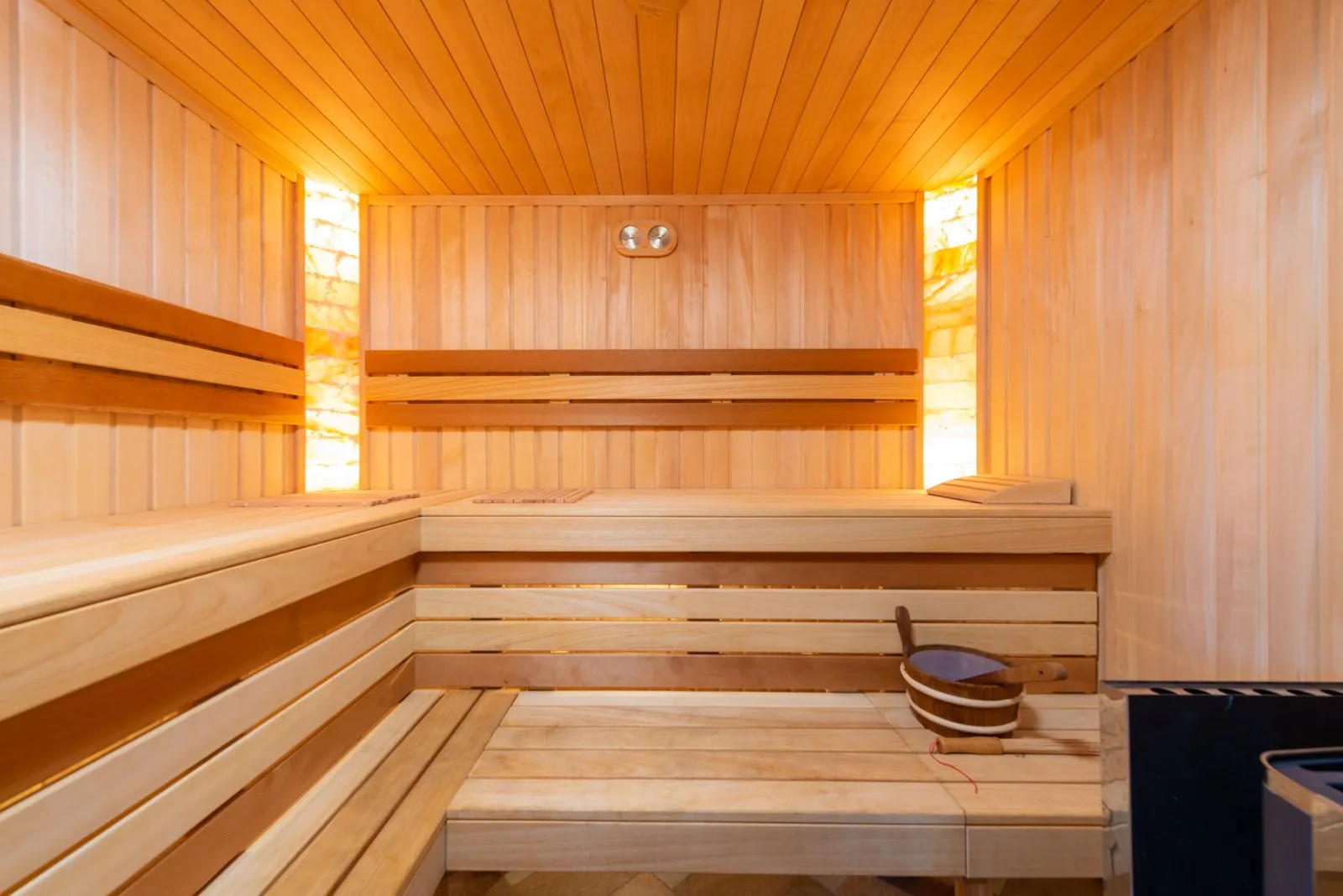
Where skin rests, many builders prefer aspen or alder. They’re pale, cool to the touch, essentially scent-free (aspen) or gently fragrant (alder), and splinter-resistant. Aspen in particular is the go-to for anyone sensitive to cedar.
Benches deserve special attention
Bench boards are also spaced with small gaps for drainage and airflow, and the framing beneath is kept simple so the whole bench can be lifted out for cleaning.
Finishing — less is more
Interior sauna wood is left bare. It needs to breathe and absorb the humidity of each session, then dry between uses. Film-forming finishes — varnish, polyurethane, most paints — get hot, can off-gas, and eventually blister and peel. The only acceptable treatment is a dedicated, heat-safe sauna oil (often paraffin-based) on the benches, which helps them shed water and stay clean without sealing them shut. Everything else stays natural.
Putting it together
Wood choice works with the layers behind it — the vapour barrier and insulation that keep that wood dry from behind. Pick a species (or mix: cedar walls, aspen benches is a common, excellent combination), leave it bare, and keep it clean. Do that, and the surface of your sauna will stay cool, sweet-smelling and splinter-free for a very long time.
Frequently asked questions
What is the best wood for a sauna interior?
Western red cedar is the most popular for its stability, aroma and rot resistance. Aspen and alder are excellent, near-scentless, pale woods often preferred for benches and for people sensitive to cedar's scent. All stay relatively cool to the touch.
Why can't you use pine or spruce inside a sauna?
Resinous softwoods like pine and spruce can weep hot, sticky sap and knots that get uncomfortably hot to touch. They're sometimes used on exterior or non-contact surfaces, but not ideal for benches or where skin contacts the wood.
What wood should sauna benches be made of?
Low-density, low-resin woods that stay cool: aspen, alder, or clear (knot-free) cedar. Benches are where your skin rests, so cool-to-touch, splinter-free timber matters most there.
Should sauna wood be treated or sealed?
No. Interior sauna wood is left bare so it can breathe and absorb moisture; sealants and varnishes can get hot, off-gas, or blister. Benches may be treated with a dedicated food-safe sauna oil, but never a film-forming finish.
Does cedar cause allergies in a sauna?
Some people are sensitive to cedar's aromatic oils. If that's a concern, aspen or alder are near-scentless alternatives that give the same performance without the strong aroma.
Is thermally modified wood good for saunas?
Yes. Thermally modified (heat-treated) aspen or other species is more dimensionally stable and rot-resistant, and is widely used for premium sauna interiors and exteriors.