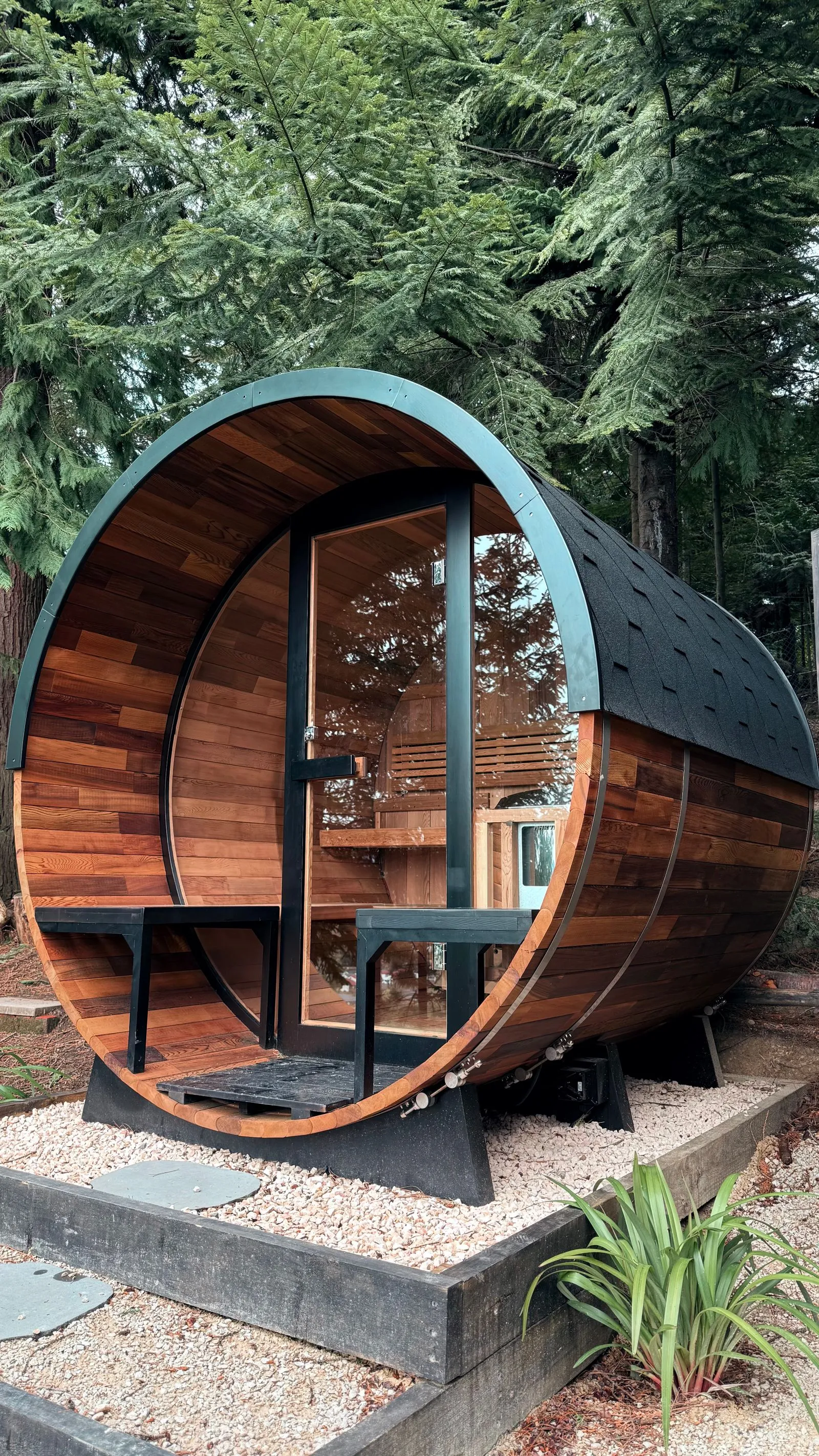
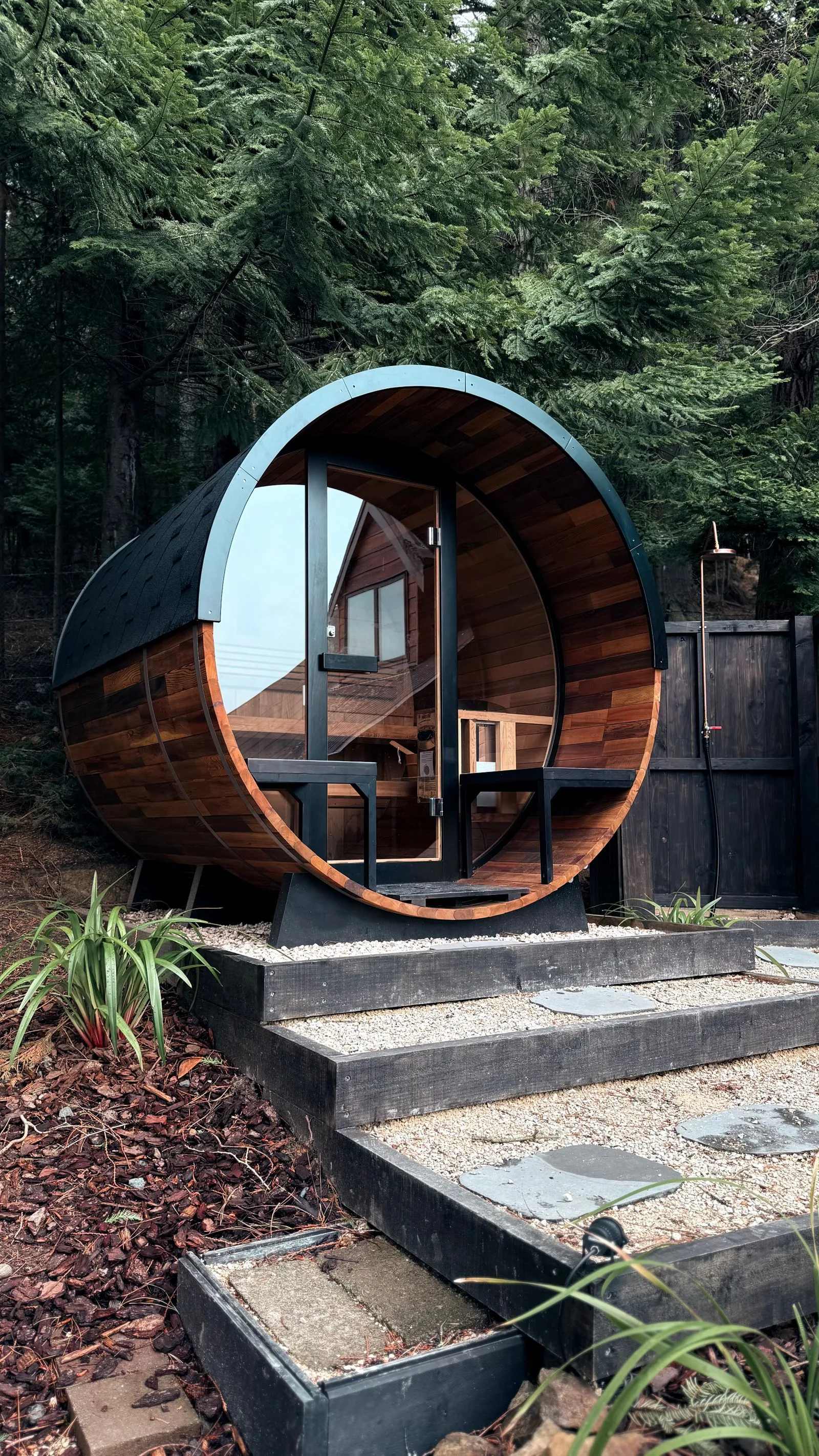
Barrel vs. Cabin Sauna: Which Outdoor Sauna Is Better?
Barrel saunas heat faster and cost less; cabin saunas offer more room, headroom and insulation. Compare the two outdoor styles to pick the right one.
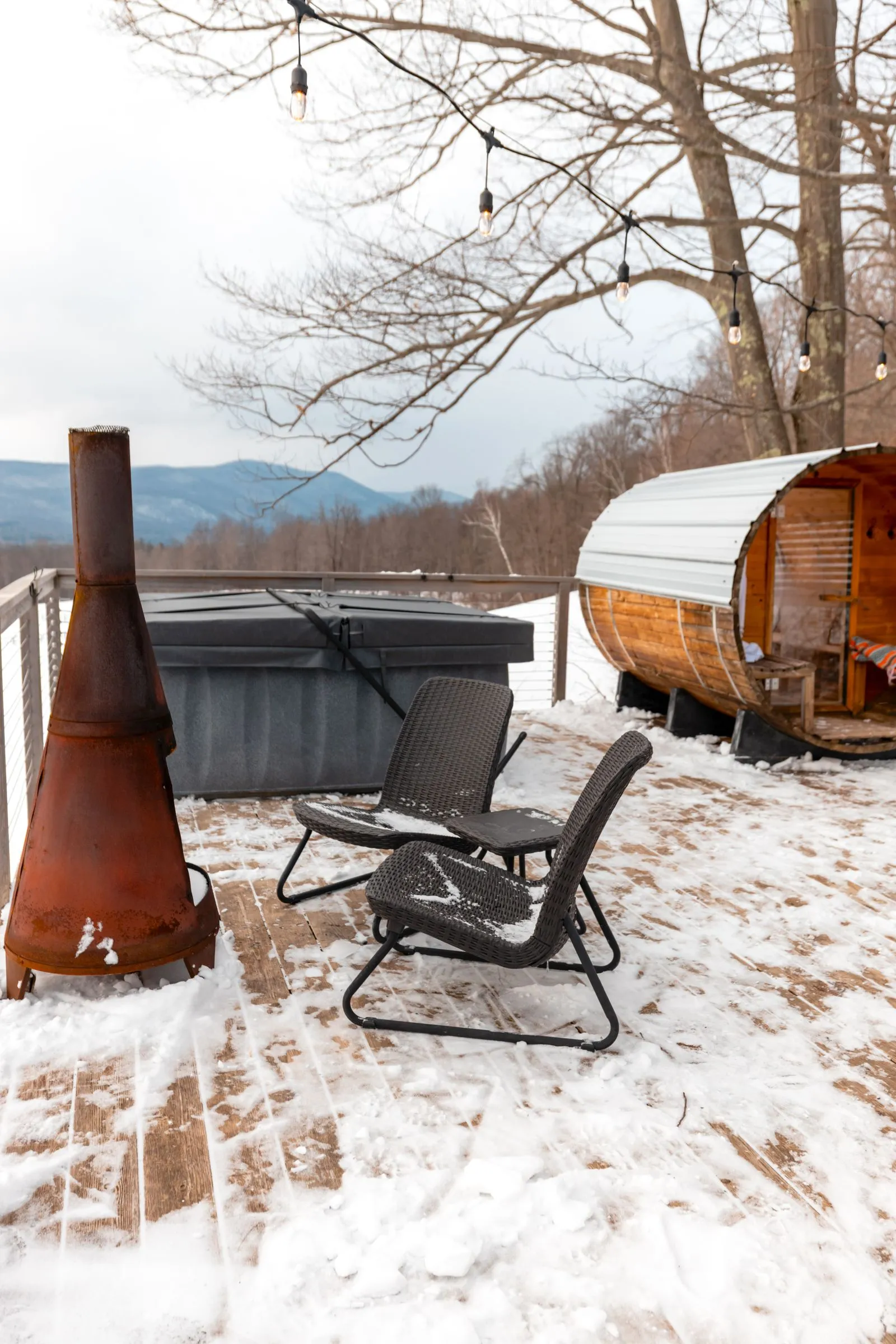
Once you’ve decided on an outdoor sauna, the next question is its shape: the iconic barrel or a flat-walled cabin. Both are excellent; they simply optimise for different things. This comparison lays out where each one wins so you can match the shape to your yard, your climate and how you’ll use it.
The short answer
A barrel sauna heats faster, costs less and fits a tight footprint, thanks to its round, low-volume shape. A cabin sauna offers more headroom, a proper backrest, more insulation and more space for groups. Choose barrel for efficiency and compactness, cabin for comfort and cold-climate performance.
The core trade-off
The barrel’s round shape is its whole personality. By following the curve where heat naturally collects, it minimises wasted air volume — so it heats fast and runs efficiently. But that same curve is what limits headroom and bench comfort. The cabin makes the opposite bargain: flat walls and a full-height room give you comfort and space, at the cost of more air to heat and, usually, more money.
| Factor | Barrel | Cabin |
|---|---|---|
| Heat-up speed | Faster | Slower |
| Energy efficiency | Higher | Lower (more air) |
| Headroom | Limited, curved | Full standing height |
| Backrest comfort | Curved away | Flat, comfortable |
| Insulation | Single-wall staves | Can be double-wall |
| Cold-climate hold | Good | Better (if insulated) |
| Capacity | Typically 2–6 | Scales larger |
| Cost | Lower | Higher |
| Look | Iconic, compact | Cottage-like |
When the barrel wins
Choose a barrel if you want the most efficient outdoor sauna for the money and space. It heats quickly, which matters if you’ll use it on impulse; it sheds rain and snow off its curved top without a separate roof; and it drops neatly into a modest backyard. For a couple or a small household in a typical suburban lot, the barrel is often the smart default — see our full barrel sauna guide for the buying details.
When the cabin wins
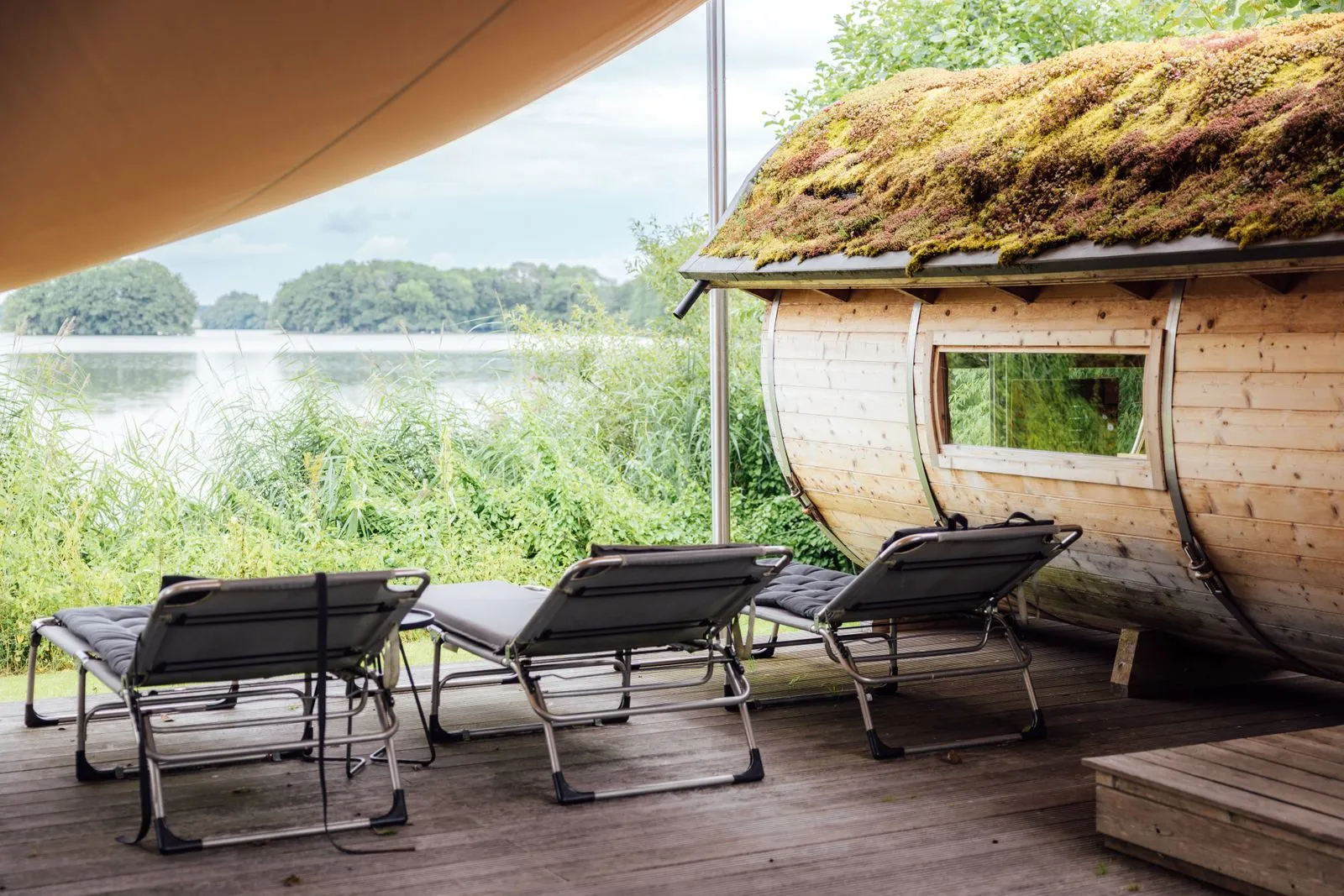
A cabin makes sense when comfort and capacity lead the priorities: a proper backrest, room to stand and stretch, bench layouts for a group, and — importantly for much of Canada — the option of thicker, double-wall insulation for an exposed, bitterly cold site. It’s the choice for a cottage that hosts friends, or a yard where the sauna is a centrepiece rather than a compact add-on.
What doesn’t change
Whichever shell you choose, the fundamentals are identical and just as important:
- Heater sizing. Size the heater to the room volume; the shape changes the number, not the method.
- Ventilation. Both need proper intake and exhaust.
- Foundation. Both need a level, well-drained base.
- Wood and stones. Both live or die on good interior wood and the right stones.
The verdict
Pick the barrel for efficiency, fast heat, lower cost and a compact footprint. Pick the cabin for comfort, headroom, group capacity and maximum insulation in extreme cold. Neither is a mistake — and both, sited next to a cold plunge, deliver the full year-round ritual. When you’re ready to buy, our outdoor sauna buying guide turns this decision into a checklist.
Frequently asked questions
Is a barrel or cabin sauna better?
Barrel saunas heat faster, cost less and have a smaller footprint; cabin saunas offer more headroom, comfort, insulation and interior space. Barrels suit efficiency and tight yards; cabins suit comfort, groups and very cold, exposed sites.
Does a barrel sauna heat faster than a cabin?
Usually yes. The round shape reduces the air volume above your head, so a barrel typically reaches temperature faster and uses less energy than a comparable-capacity cabin.
Which is warmer in winter, barrel or cabin?
A well-insulated, double-wall cabin generally holds heat better in extreme cold, while a barrel heats quickly but has thinner single-wall staves. For very cold, exposed sites, a well-built cabin has an edge.
Is a cabin sauna more comfortable than a barrel?
For most people, yes. Cabins have flat walls for a proper backrest and full standing headroom, while a barrel curves away behind your shoulders and overhead. Taller bathers especially notice the difference.
Which costs more, a barrel or a cabin sauna?
Barrels are usually less expensive for a given capacity, partly because the shape uses less material and needs no separate roof. Cabins cost more but offer more space and, often, better insulation.
Can you fit more people in a cabin sauna?
Generally yes — cabins scale up to larger footprints with more bench space and can include multi-tier or facing benches, making them better for groups. Barrels are typically sized for 2–6.