Indoor Saunas: Planning One for Your Home
An indoor sauna brings year-round heat inside — a spare room, basement or bathroom. Here is how to plan location, ventilation, power and moisture.
The short answer
An indoor sauna is a traditional sauna built inside the home — often in a spare room, basement or converted bathroom. It runs year-round without going outside, is almost always electric, and needs careful attention to power, ventilation and moisture.
An indoor sauna is the most convenient kind to own: it is warm, dry and steps from your living space, ready whenever you are. The trade-off is that it has to live inside your house, which raises questions of location, power and moisture that an outdoor build does not.
Where to put it
The best spots share three traits: access to power, a way to ventilate, and a floor that tolerates the odd splash. Common choices:
- Basement — the classic location: cool, private, and easy to run a circuit to.
- Spare room or large closet — works well if you can add ventilation.
- Bathroom conversion — plumbing and a drain are already there; see our note on bathroom conversions.
The essentials
| Requirement | Why |
|---|---|
| Dedicated 240V circuit | Powers the electric heater |
| Ventilation | Fresh air in, stale air out — see the ventilation guide |
| Vapour barrier | Keeps moisture out of the surrounding structure |
| Non-sensitive flooring | Tile or sealed floor near the door |
Managing moisture
Electric is the norm
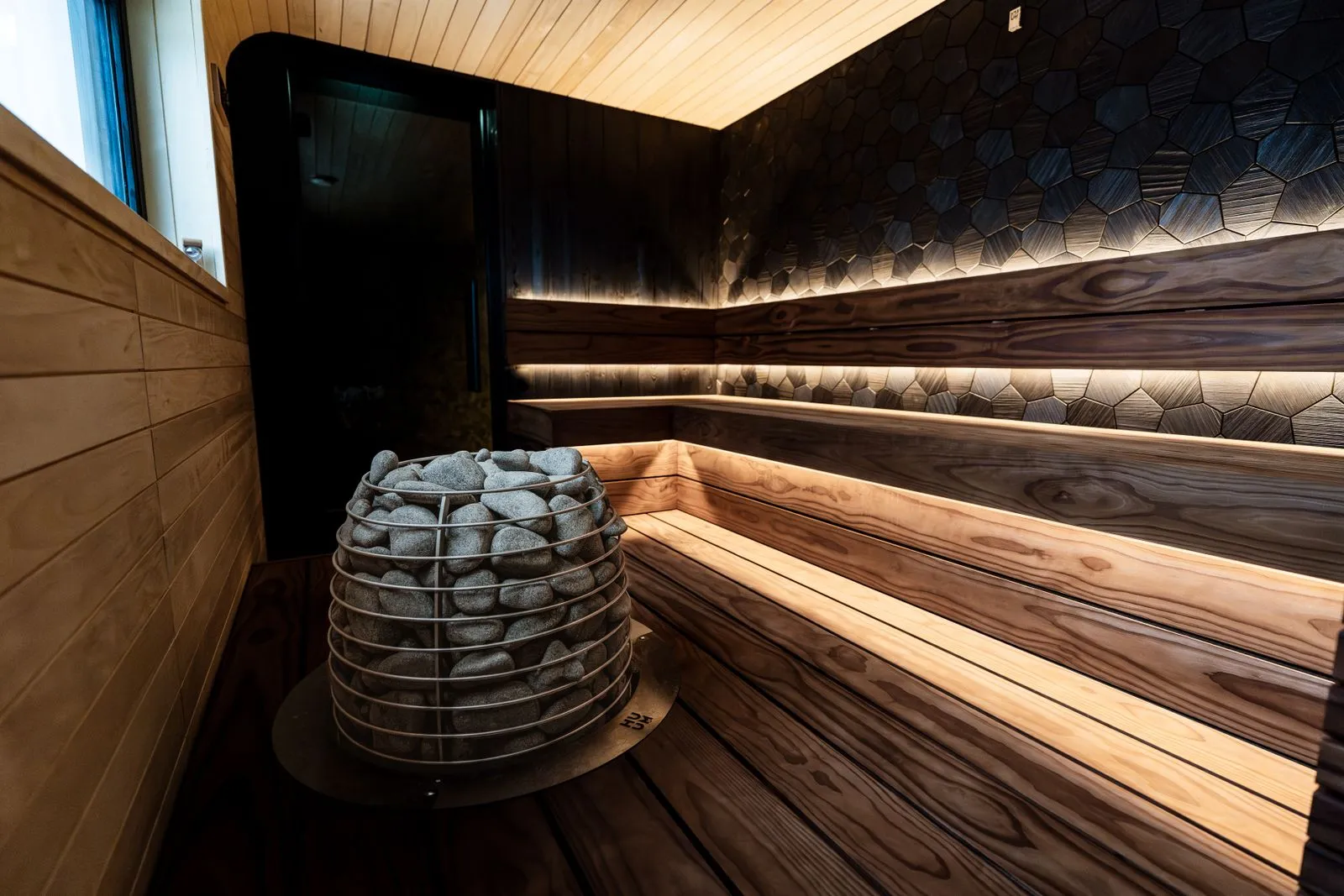
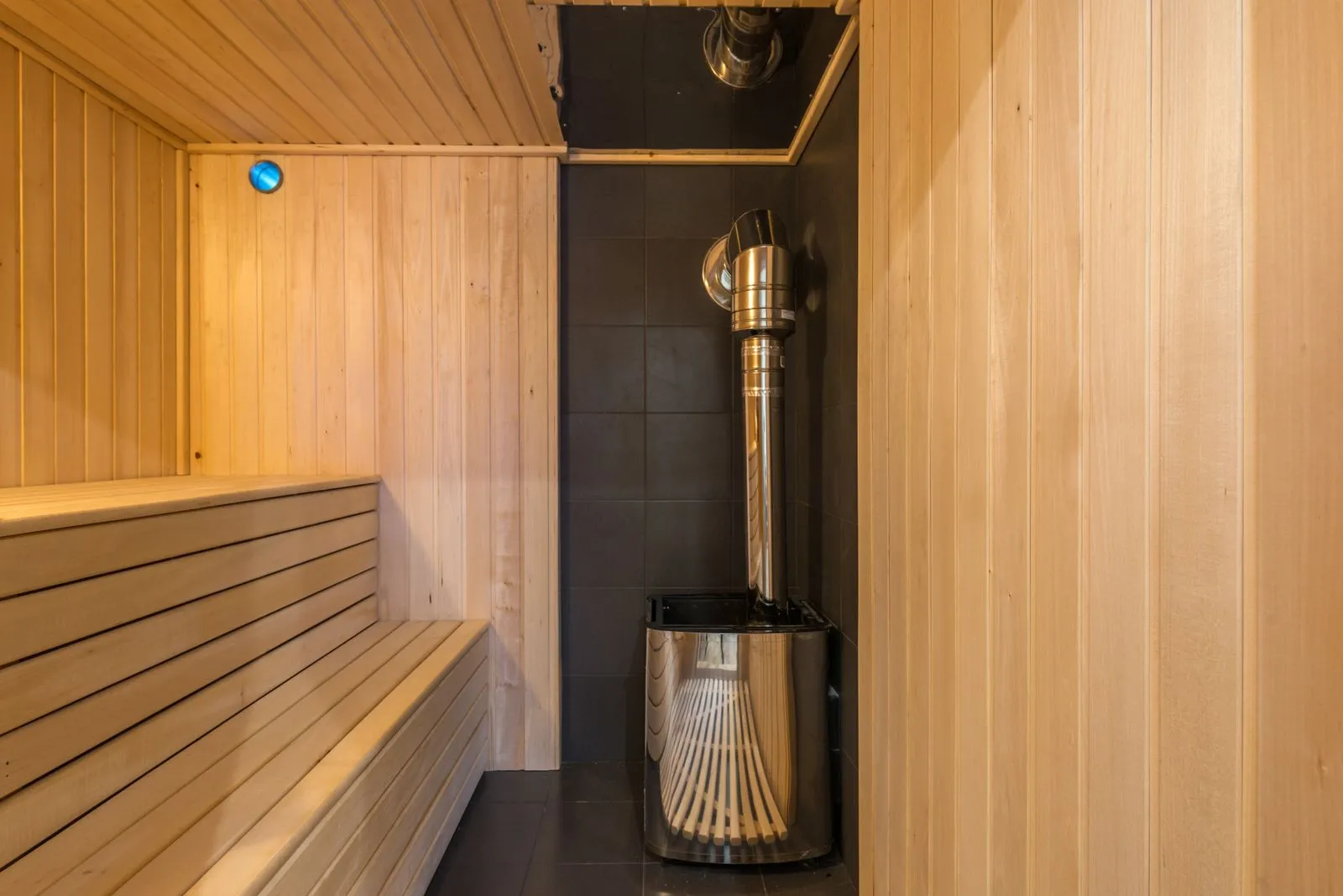
Indoors, an electric heater is almost always the choice — no chimney, no smoke, push-button use. Size it to the room and have it wired by a licensed electrician. A prefab indoor kit takes most of these decisions off your plate, which is why it is a great route for a first home sauna.
Location also shapes how often you will actually use an indoor sauna. The most-used home saunas are the ones a few steps from a bathroom or bedroom, easy to slip into on a weeknight. When choosing a room, weigh convenience as heavily as the technical fit — a slightly less ideal spot you will use often beats a perfect one you have to make an effort to reach.
Electrics, permits and building approvals
An indoor sauna almost always needs a dedicated electrical circuit for the heater, and that work must be done by a licensed electrician to your local code. Depending on the heater size and the age of your home, your panel may need spare capacity or an upgrade — worth checking early, since it can affect both cost and feasibility.
Many municipalities also require a permit for the electrical work, and sometimes for building a permanent enclosure inside the home. It is worth a quick call to your local building department before you start: requirements vary, and doing it properly protects both your safety and your insurance. Plan the location around access to the panel, a route for ventilation, and a water-tolerant floor, and the practical side of an indoor sauna comes together cleanly. Get these approvals and services sorted first, and the fit-out — insulation, vapour barrier, wood and benches — is the straightforward part.
Frequently asked questions
Can you put a sauna inside a house?
Yes. Indoor saunas are common in basements, spare rooms and converted bathrooms. The keys are a dedicated circuit, proper ventilation, and a vapour barrier to protect the surrounding structure from moisture.
Do indoor saunas cause mould or damp?
Not if built correctly. A foil vapour barrier keeps humidity out of the walls, and ventilation dries the room between uses. Problems come from skipping those steps.
How much space do you need for an indoor sauna?
Compact two-person units fit in a large closet footprint; family saunas need more. Allow comfortable bench space per person plus clearance around the heater.
Does an indoor sauna need a floor drain?
It is helpful but not always required for a home electric sauna. A water-tolerant floor (tile or sealed) and good drying are the minimum; a drain makes cleaning easier.
Are indoor saunas electric or wood?
Almost always electric. Wood-burning stoves need a chimney and clearances that are impractical indoors, so they are reserved for outdoor and cottage saunas.
Where is the best place for an indoor sauna?
Somewhere with access to power and ventilation, a water-tolerant floor, and — just as important — that is convenient to reach, so you actually use it. Basements, spare rooms and en-suite areas near a shower are all popular.
Do you need a permit for an indoor sauna?
Often yes, especially for the electrical work and sometimes for building a permanent enclosure. Requirements vary by municipality, so check with your local building department before starting.
Can any electrician install an indoor sauna heater?
It should be a licensed electrician working to local code. Sauna heaters need a correctly sized dedicated circuit, and larger ones may require panel capacity, so use a professional for the connection.