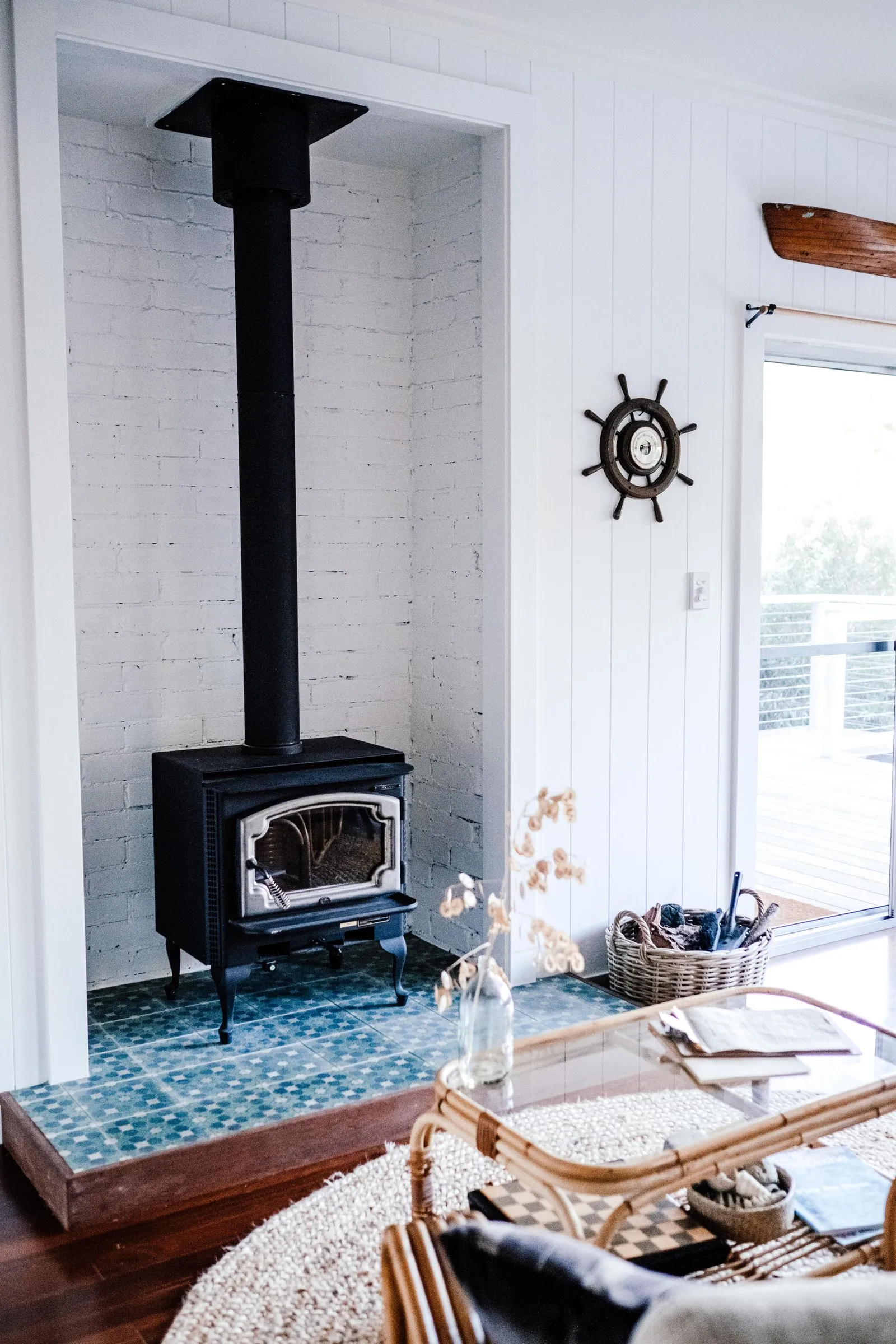
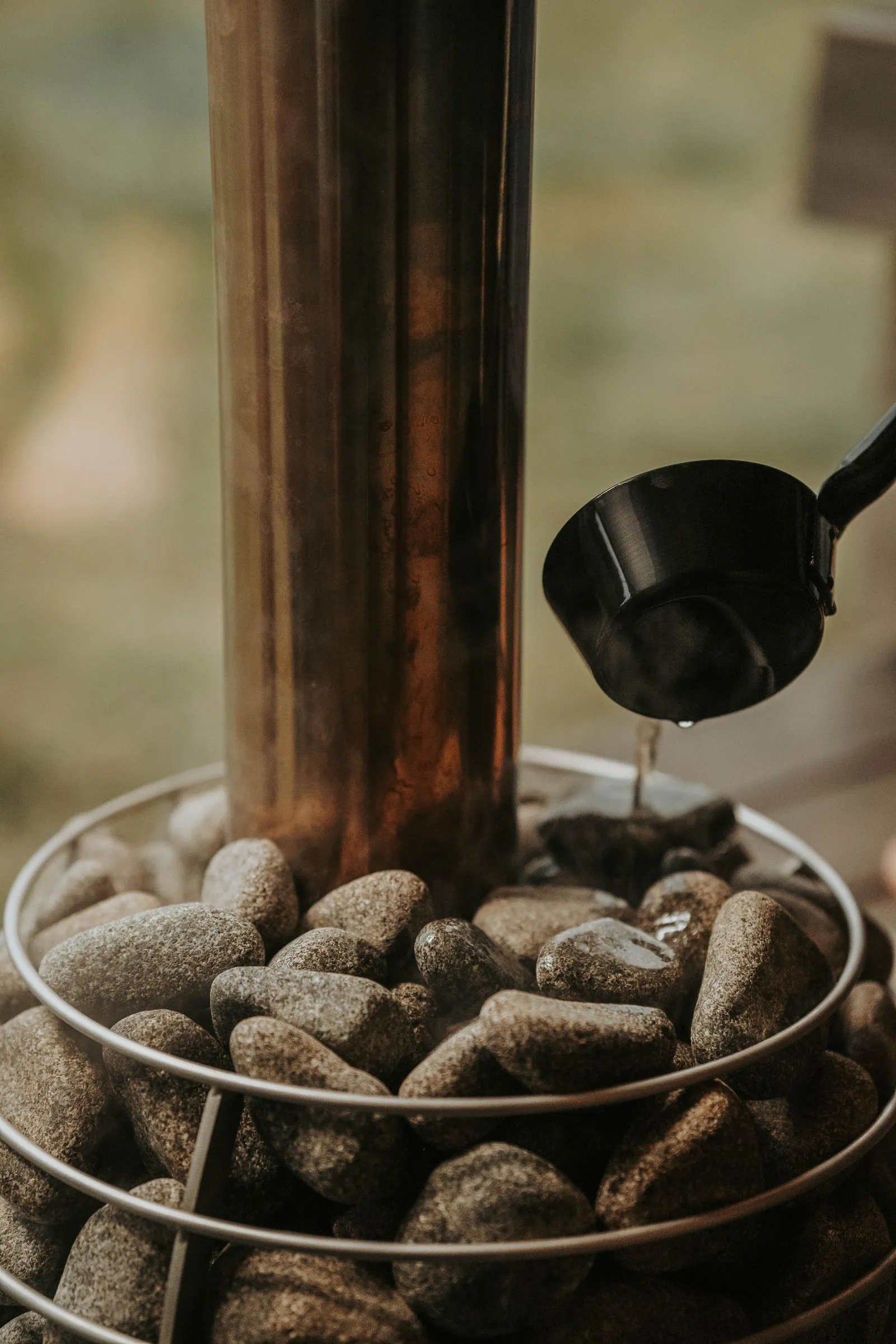
Sauna Stones for Wood-Burning Heaters
Wood stoves hold a large stone mass heated by fire and flue gases. Here is how to choose, load and maintain stones for a wood-burning sauna heater.
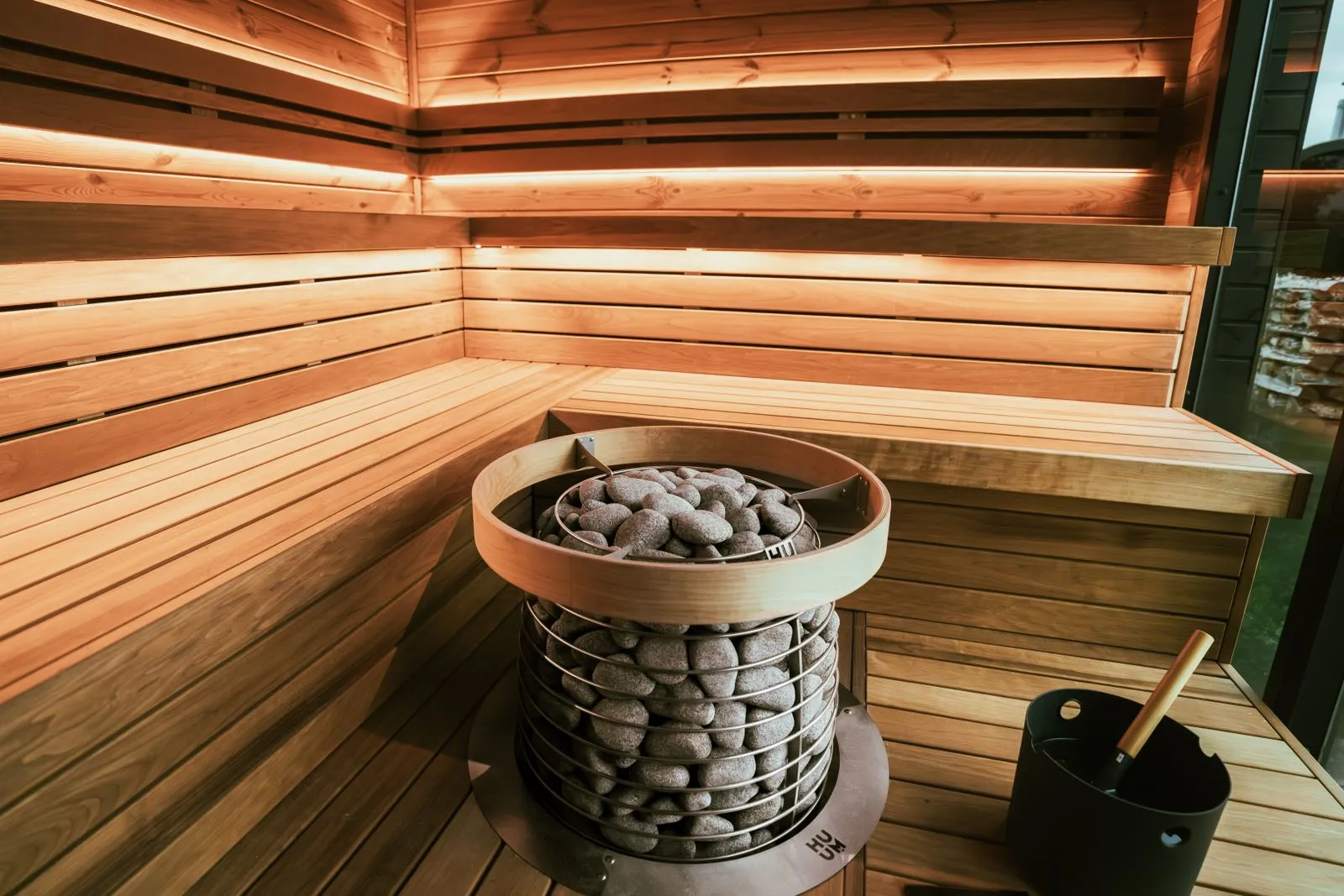
The short answer
Wood-burning heaters hold a large stone mass heated by the fire and flue gases. Use dense, low-porosity sauna stones, often larger than on electric units, stacked loosely to the stove capacity — commonly 40 kg or more.
A wood-burning stove heats its stones with fire and hot flue gases rather than electric elements, and it typically holds a much larger stone mass. The stone choice is the same, but the scale and loading differ.
Choosing the stones
Use the same dense, low-porosity igneous rock as any sauna — olivine diabase, peridotite or dense basalt. Wood stoves often suit slightly larger stones, since the big stone mass benefits from thermal storage and there are no delicate elements to work around.
How much
Loading
The loading principles are familiar — loose, large-to-small, with airflow — but wood stoves give you more freedom since stones are not packed among elements:
- Rinse the stones.
- Build the mass around and above the firebox per the stove design, keeping air channels open.
- Grade toward smaller stones on top where you throw water.
- Leave the pile loose enough to breathe.
See the full stacking method.
Maintenance
The large stone mass is a big part of why a wood-burning sauna delivers such a mellow, generous steam. Good stones, loaded well and refreshed in time, keep that löyly at its best.
Making the most of a large stone mass
The big stone mass of a wood stove is a large part of why a wood-burning sauna gives such a deep, mellow löyly. To make the most of it, use dense, low-porosity stones — often slightly larger than on an electric unit, since there are no delicate elements to work around — and build the mass around and above the firebox per the stove design, keeping air channels open and the smaller stones on top where you throw water.
Because a wood stove holds so many stones, refreshing them is a slightly bigger job, so combine it with your other wood-stove maintenance. Once or twice a year, restack the pile, discard cracked stones, and clear grit, doing it alongside ash removal and a chimney sweep. Fill to the stove rated capacity and no more. Looked after this way, the large stone mass delivers the generous, soft steam that makes a wood-fired sauna so prized, season after season.
Frequently asked questions
What stones are best for a wood-burning sauna?
The same dense, low-porosity igneous stones as any sauna — olivine diabase, peridotite or dense basalt — often in slightly larger sizes, since wood stoves hold a big stone mass.
How many stones does a wood sauna heater hold?
Commonly 40 kg or more, far more than a small electric heater. This large mass gives the deep, soft löyly a wood sauna is known for. Fill to the stove rated capacity.
Do wood stoves need special sauna stones?
No special type — the rock rules are the same. Wood stoves simply hold more, and can use larger stones, because the stones are heated by fire rather than packed among electric elements.
How do you load stones on a wood sauna stove?
Loosely, large-to-small, built around and above the firebox per the stove design, keeping air channels open and smaller stones on top where you throw water. Fill to capacity, not beyond.
How do you maintain wood sauna stove stones?
Once or twice a year, restack the stones, discard cracked ones and clear grit — combined with ash removal and chimney sweeping as part of wood-stove maintenance.
Why do wood saunas use larger stones?
Because a wood stove heats its stones by fire rather than delicate electric elements, so it can hold a big mass of slightly larger stones. That large mass gives the deep, mellow löyly a wood sauna is known for.
How do you maintain the stones on a wood sauna stove?
Once or twice a year restack the pile, discard cracked stones and clear grit, doing it alongside ash removal and a chimney sweep. Fill to the stove rated capacity and keep the pile loose.
Do wood and electric saunas use different stone types?
No — both use dense, low-porosity igneous stones sold for saunas. Wood stoves simply hold more, and can use larger stones, because the stones are heated by fire rather than packed among electric elements.