How to Stack and Replace Sauna Stones the Right Way
Stack sauna stones loosely, biggest at the bottom, around the elements — never packed tight. A step-by-step guide to loading and refreshing your stones.
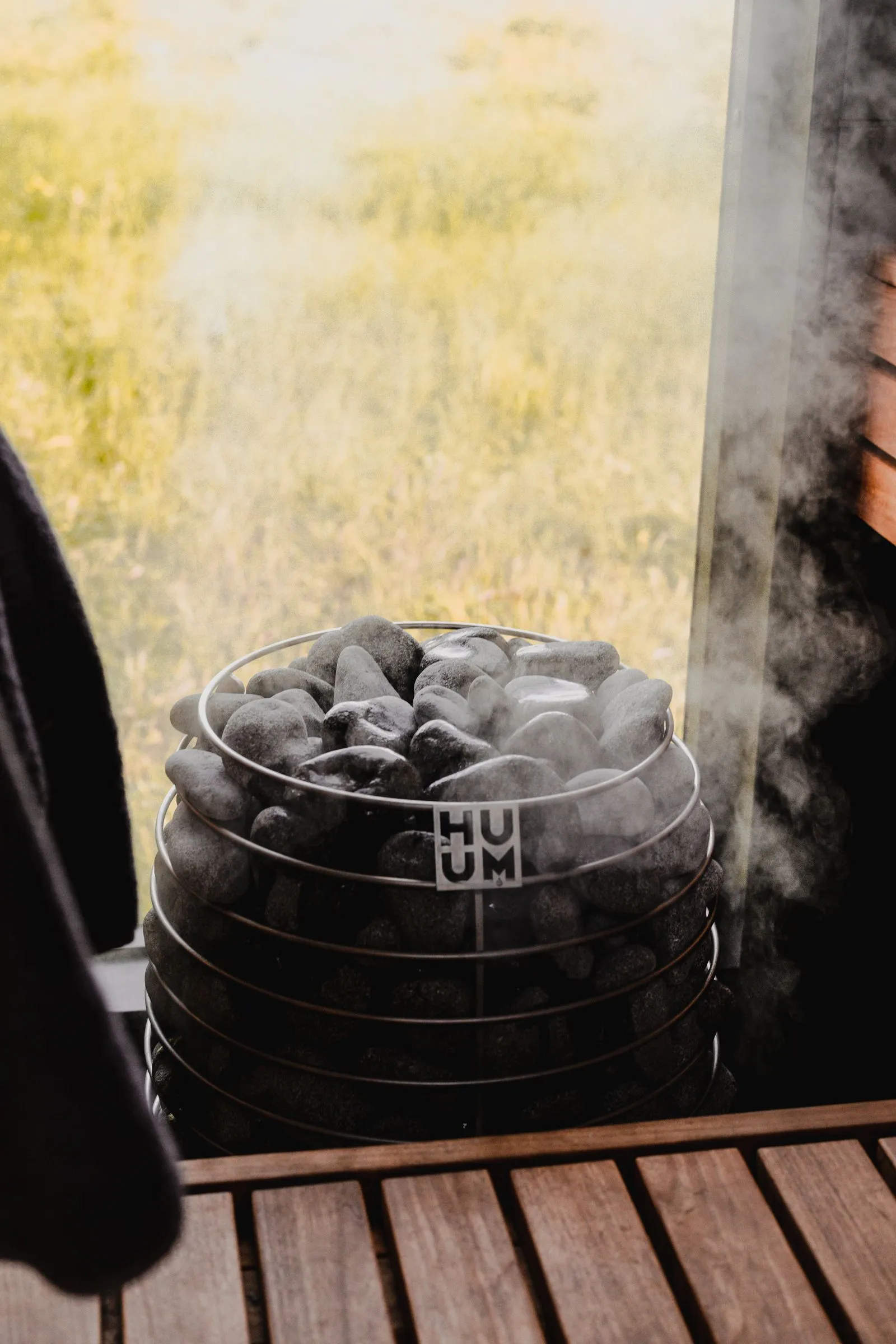
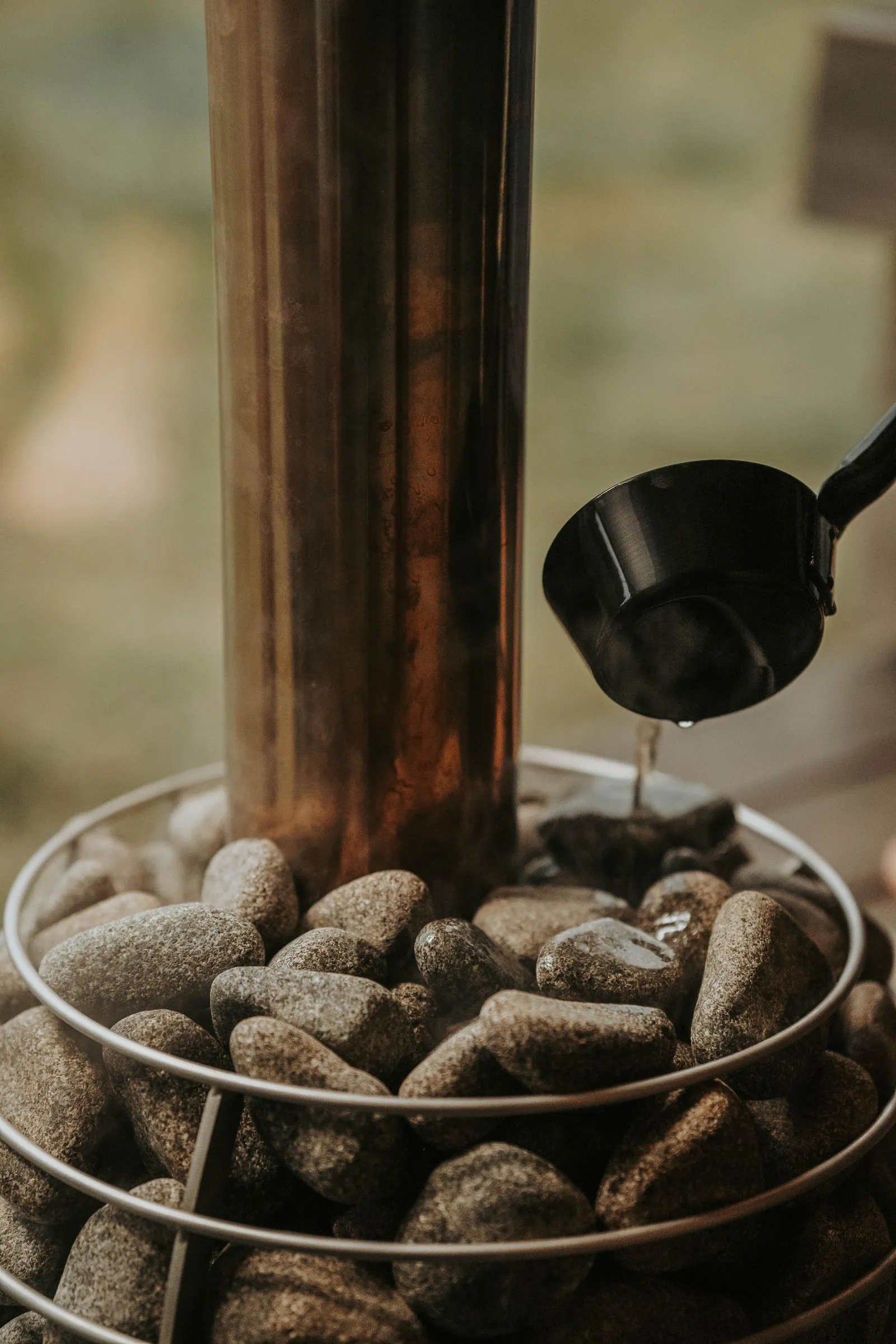
Loading sauna stones seems too simple to get wrong — pile rocks on the heater and light it. But how you stack them decides how well the heater breathes, how good the steam is, and, on an electric heater, how long the elements last. The rules are easy once you know them.
The short answer
Stack sauna stones loosely, largest at the bottom and smaller toward the top, with gaps for airflow — never packed tight. On electric heaters, arrange them so air circulates among the elements. Rebuild the pile once or twice a year, discarding any cracked stones.
Before you start
Use stones bought for sauna use — dense igneous rock as covered in our guide to the best sauna stones. Then:
- Rinse them. New stones carry dust and grit. Wash it off so your first löyly isn’t gritty and the airflow stays clean.
- Sort by size. Separate the larger, fist-sized stones from the smaller ones. You’ll place them in that order.
- Check the manual. Note your heater’s stone capacity and any specific loading instructions — electric heaters in particular have a right and wrong way to lay stones around the elements.
Stacking, step by step
- Big stones first. Lay the largest stones across the bottom. They provide thermal mass and, crucially, keep air channels open at the base where it enters.
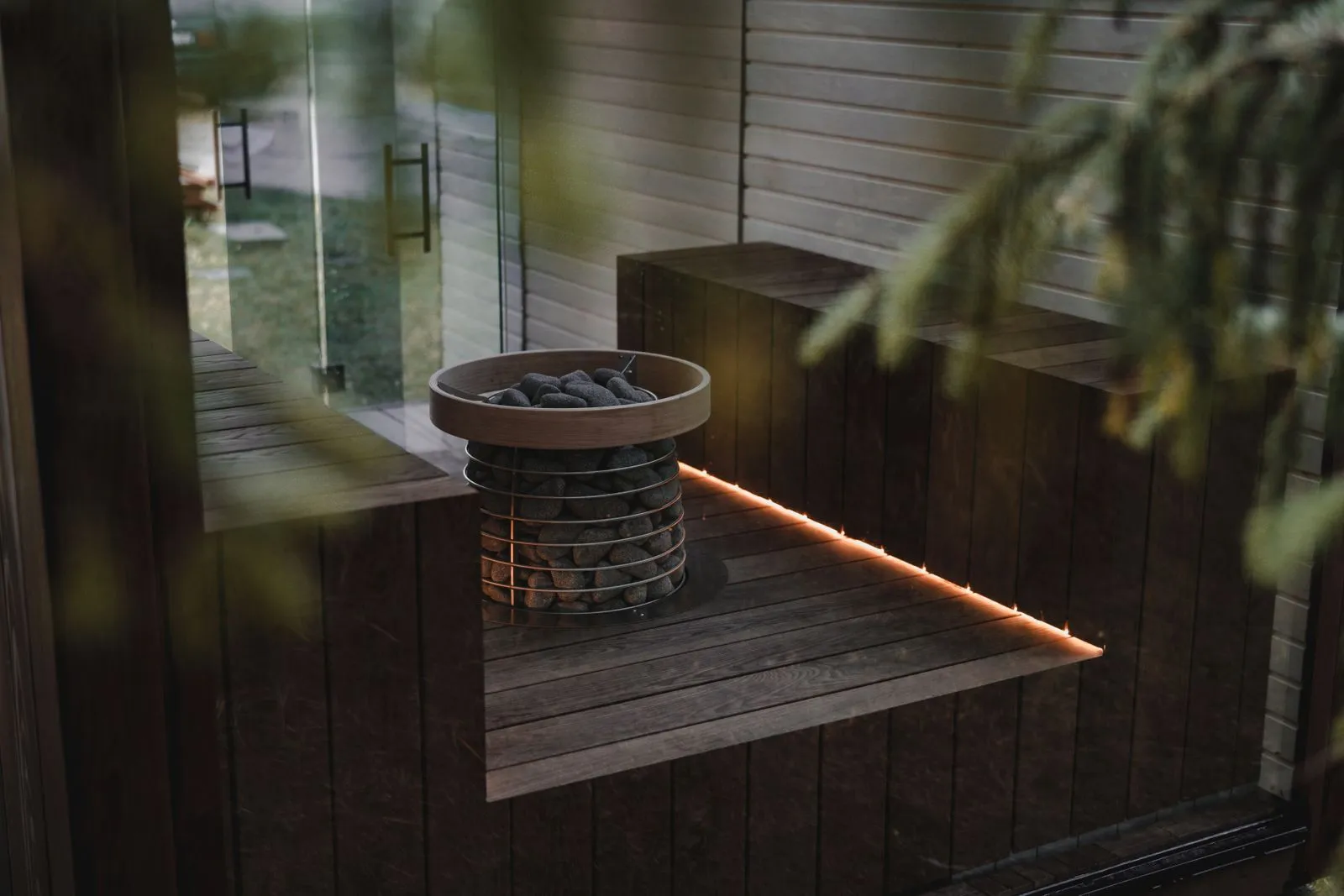
- Work around the elements. On an electric heater, nestle stones among the elements so heat transfers into them — but leave space for air to move. Don’t wedge stones so hard they bend or crush an element.
- Grade upward. Add medium stones, then finish with the smaller ones near the top, where you’ll be throwing water.
- Keep it loose. Leave visible gaps throughout. The pile should look stacked, not cemented.
- Fill to capacity — no more. Stop at the level the manufacturer specifies. Overfilling smothers airflow and can trap heat.
Why packing tight backfires
Loose, well-stacked pile
- Air circulates and heats stones evenly
- Strong, soft löyly when water hits hot stone
- Electric elements stay cooler and last longer
- Even heat from bench to ceiling
Tightly packed pile
- Blocked airflow and cold spots
- Elements overheat and can fail early
- Thin, splashy steam
- Water runs straight through without vaporising
That last point is the giveaway: throw water on a well-built pile and it hisses into steam; throw it on a choked pile and it dribbles through to the base.
Replacing and refreshing stones
Stones degrade with every heat-and-douse cycle. Once or twice a year, or whenever the löyly weakens:
- Let the sauna cool completely. Never handle hot stones.
- Remove every stone. Take the whole pile out rather than topping up.
- Discard the casualties. Bin any stone that’s cracked, split or crumbling.
- Clean the firebox or element bed. Sweep out grit and stone dust, which chokes airflow.
- Rinse the survivors, add new stones to make up the capacity, and rebuild the pile big-to-small.
Regularly used saunas need a full stone change every 1–3 years. It’s a ten-minute job and one of the most satisfying — a fresh pile of clean, intact stones brings a tired sauna’s steam right back to life. Fold it into your seasonal maintenance checklist so it never gets forgotten.
Frequently asked questions
How do you stack sauna stones correctly?
Rinse them, place the largest stones at the bottom for airflow and mass, then work up to smaller stones near the top where water lands. Stack loosely with gaps so air and steam move freely — never pack them tight.
Should sauna stones touch the heating elements?
On an electric heater, stones surround and rest among the elements to transfer heat, but they should be placed so air can circulate — not jammed against the elements. Follow the manufacturer's loading instructions.
Why shouldn't sauna stones be packed tightly?
Tightly packed stones block airflow. On electric heaters that traps heat around the elements and can cause them to overheat and fail early; on any heater it weakens the löyly and heats the room unevenly.
How often should sauna stones be restacked?
Restack once or twice a year. Stones settle and shift with use, and restacking lets you remove cracked ones, clear out grit, and restore good airflow through the pile.
Can I add new stones on top of old ones?
It's better to remove all the stones, discard the cracked ones, clean out the debris, and rebuild the pile. Simply topping up traps old grit and dead stones in the middle.
Why does loose stacking matter so much?
Because air must move through the pile for the stones to heat evenly and for water to flash cleanly to steam. On electric heaters, loose stacking also keeps air circulating around the elements, which prevents them overheating and greatly extends their life.