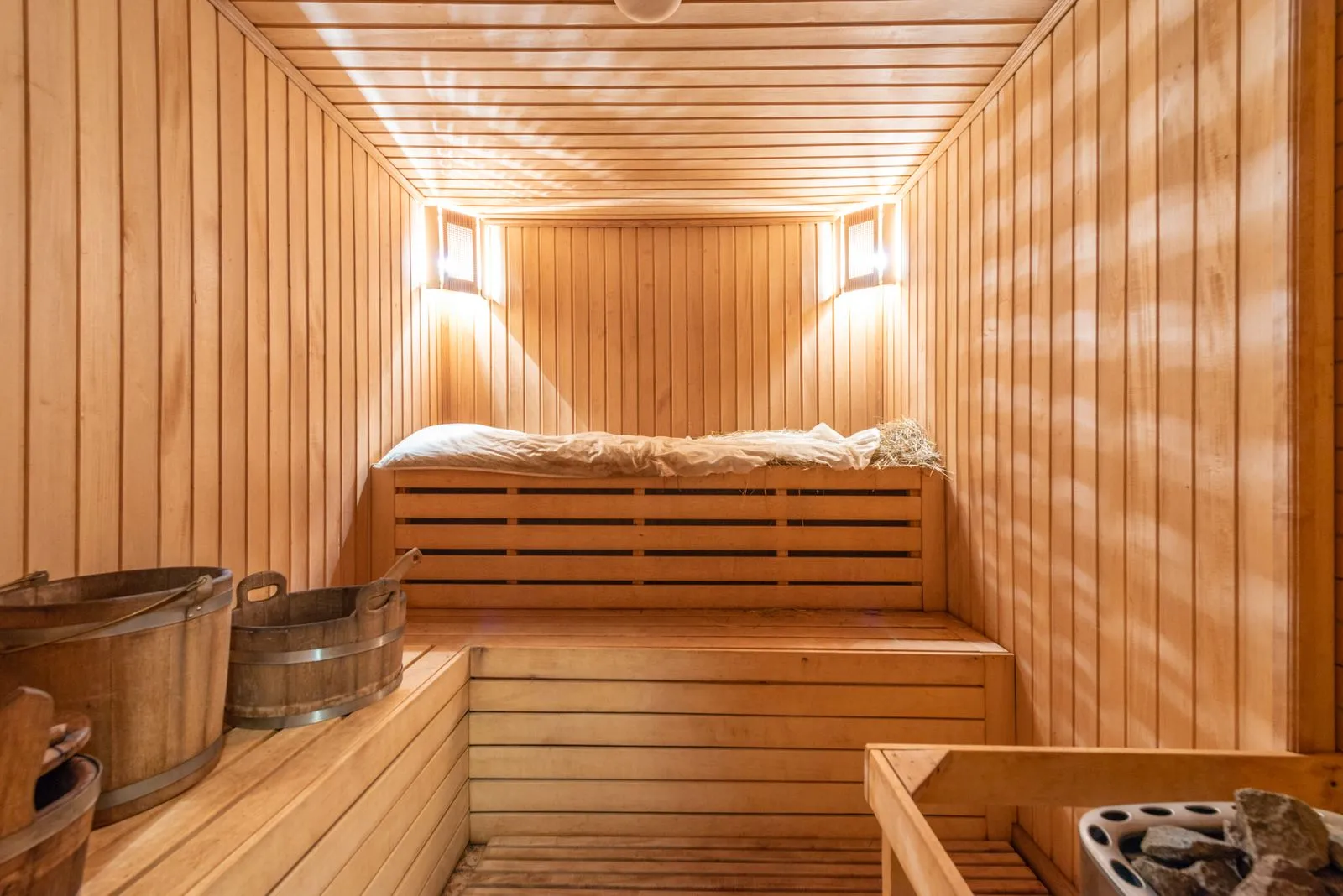
Steam Rooms Explained (and How They Differ from Saunas)
A steam room is a tiled space at ~45°C and near-100% humidity, unlike a hot, dry sauna. Here is how steam rooms work and how they compare to saunas.
The short answer
A steam room is a sealed, tiled space kept at about 40–50°C and near-100% humidity by a steam generator. It differs fundamentally from a sauna, which is hotter (70–100°C) and mostly dry, with humidity only in bursts of löyly.
Steam rooms and saunas are often mentioned in the same breath, but they are genuinely different environments. Knowing how a steam room works — and how it contrasts with a sauna — helps you choose the heat that suits you.
How a steam room works
A steam room is a fully sealed, tiled or stone-lined space. A steam generator pipes in continuous steam, holding the room at roughly 40–50°C with humidity near 100% — the air is thick with visible vapour, and every surface is wet. Because water conducts heat so well, that “cooler” temperature can feel intensely enveloping.
Steam room vs. sauna
| Steam room | Sauna | |
|---|---|---|
| Temperature | 40–50°C | 70–100°C |
| Humidity | ~100%, constant | Low, with löyly bursts |
| Surfaces | Tile / stone, wet | Wood, mostly dry |
| Heat source | Steam generator | Stove and stones |
| Feel | Thick, wet, enveloping | Hot, dry, radiant |
Which is better?
Building considerations
A steam room is a different build from a sauna: it needs fully waterproof, non-porous surfaces (tile, stone), a sloped ceiling to shed condensation, a sealed door, and a steam generator with plumbing — not the insulated wood-and-foil box of a sauna. If it is the dry, high heat and the ritual of throwing water you are after, you want a sauna; if it is warm, wet, enveloping vapour, a steam room is the answer. For the health angle on heat bathing generally, see our measured look at sauna health benefits.
If you are choosing between the two for a home, consider maintenance and versatility as well as the feel. A sauna is heated only before use, has no water chemistry, and its wood-lined room is simpler to build and live with; a steam room needs a fully waterproofed enclosure and a plumbed generator. For most homes the sauna is the more practical and flexible choice, which is why it dominates outside of spas.
Building a steam room, briefly
A steam room is a different build from a sauna, and worth understanding if you are weighing the two. Rather than an insulated wood-lined box, a steam room is a fully sealed, waterproof enclosure — tile or stone over a continuous vapour-proof membrane, with a sloped ceiling so condensation runs off rather than dripping, a tightly sealed door, and a plumbed, electrically supplied steam generator sized to the room. Non-porous surfaces throughout are essential, since every surface stays wet.
That complexity is why steam rooms are more common in spas and higher-end bathrooms than in typical backyards, where the traditional sauna dominates. If it is the thick, wet, lower-temperature warmth you love, a steam room is worth the extra build; if you want high, dry heat, löyly and the flexibility of a wood-lined room, a sauna is simpler and more versatile. Some people who cannot choose install a combi sauna heater, which adds continuous humidity to a traditional sauna — a middle path that gives a taste of steam without a separate, fully waterproofed room.
Frequently asked questions
What is the difference between a steam room and a sauna?
A steam room is cooler (40–50°C) but near 100% humidity with wet, tiled surfaces; a sauna is hotter (70–100°C) and mostly dry, with wood surfaces and humidity only when you add water to the stones.
Is a steam room hotter than a sauna?
No — a steam room is cooler in temperature, but the near-total humidity makes the heat feel intense and enveloping. A sauna reaches a much higher air temperature.
Which is better for you, a steam room or a sauna?
Neither is universally better; they suit different preferences. Both are forms of heat bathing with similar general appeal — the choice is dry radiant heat versus thick, wet warmth.
Can you build a steam room at home like a sauna?
You can, but it is a different build — fully waterproof tile or stone surfaces, a sloped ceiling, a sealed door and a plumbed steam generator, rather than a sauna's insulated wood-lined box.
Does a steam room use stones and löyly?
No. A steam room uses a steam generator for constant humidity and has no stones or löyly. Throwing water on stones is unique to traditional saunas.
Is a sauna or steam room easier to maintain at home?
Generally a sauna — it is heated only before use, has no water chemistry, and its wood-lined room is simpler to build and keep than a steam room fully waterproofed enclosure and plumbed generator. This is a big reason saunas dominate home installs.
Is a steam room harder to build than a sauna?
Generally yes — a steam room needs a fully sealed, waterproof enclosure with non-porous surfaces, a sloped ceiling to shed condensation, a sealed door and a plumbed steam generator, rather than a sauna insulated wood-lined box.
Can you get steam without building a steam room?
Somewhat — a combi sauna heater adds continuous humidity to a traditional sauna, giving a taste of steam without a separate waterproofed room. It does not reach a true steam room near-100% humidity, but it is a flexible middle path.