Wall-Mounted vs. Floor-Standing Sauna Heaters
Wall-mounted sauna heaters save space and suit most rooms; floor-standing units handle bigger saunas and more stones. Here is how to choose between them.
The short answer
A wall-mounted heater saves floor space and suits most home saunas; a floor-standing heater handles larger rooms, higher outputs and bigger stone loads. Room size and required kW usually make the choice for you.
Electric sauna heaters come in two mounting styles, and the right one is mostly decided by the size of your room and the output you need.
Wall-mounted heaters
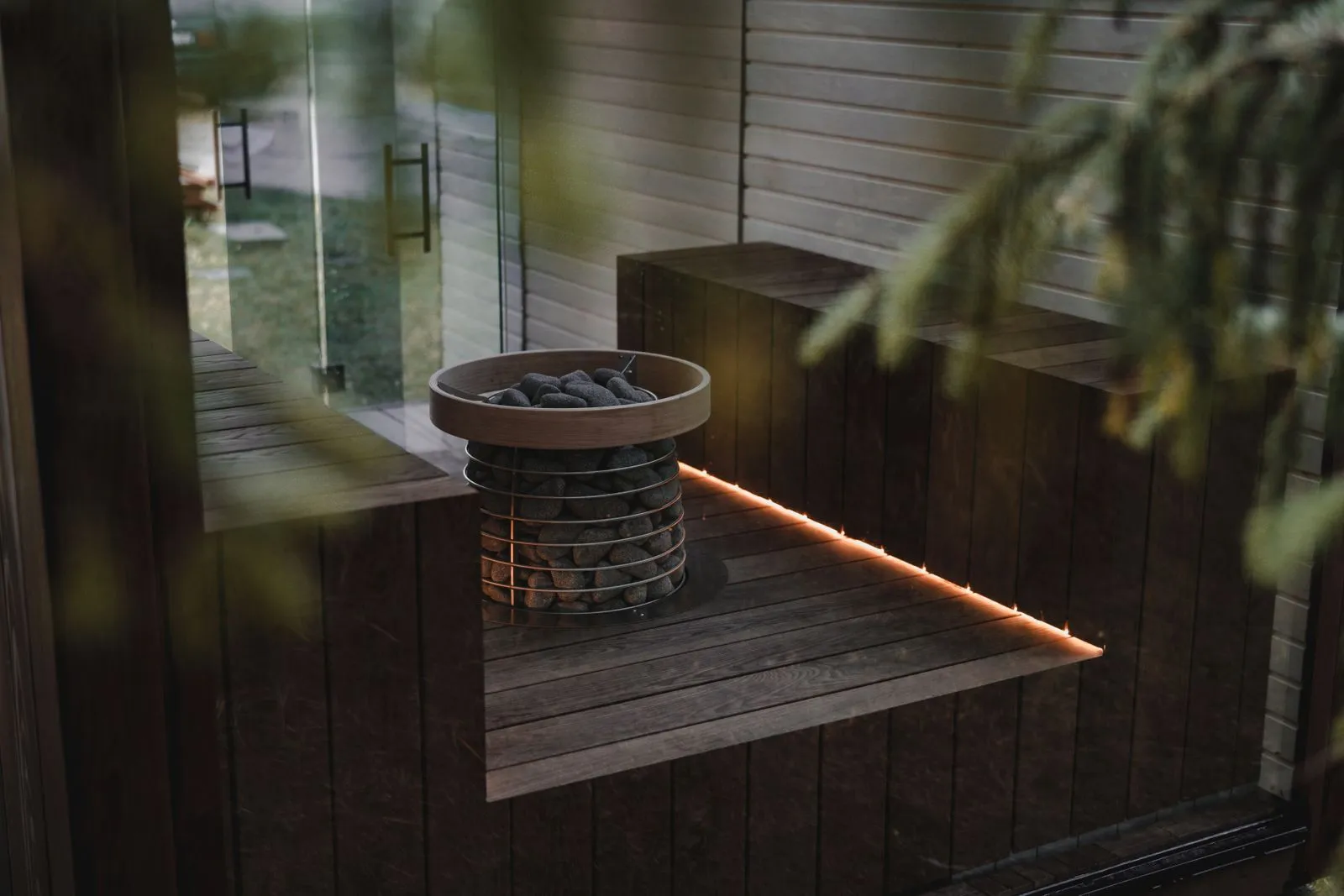
The common choice for home saunas. They bolt to the wall at bench height or above, keeping the floor clear and the footprint small.
Wall-mounted
- Saves floor space
- Suits most small and mid-size rooms
- Easy to guard and keep clear underneath
- Clean, compact look
Trade-offs
- Limited to lower and mid outputs
- Wall must support the weight
- Less stone capacity than large floor units
Floor-standing heaters
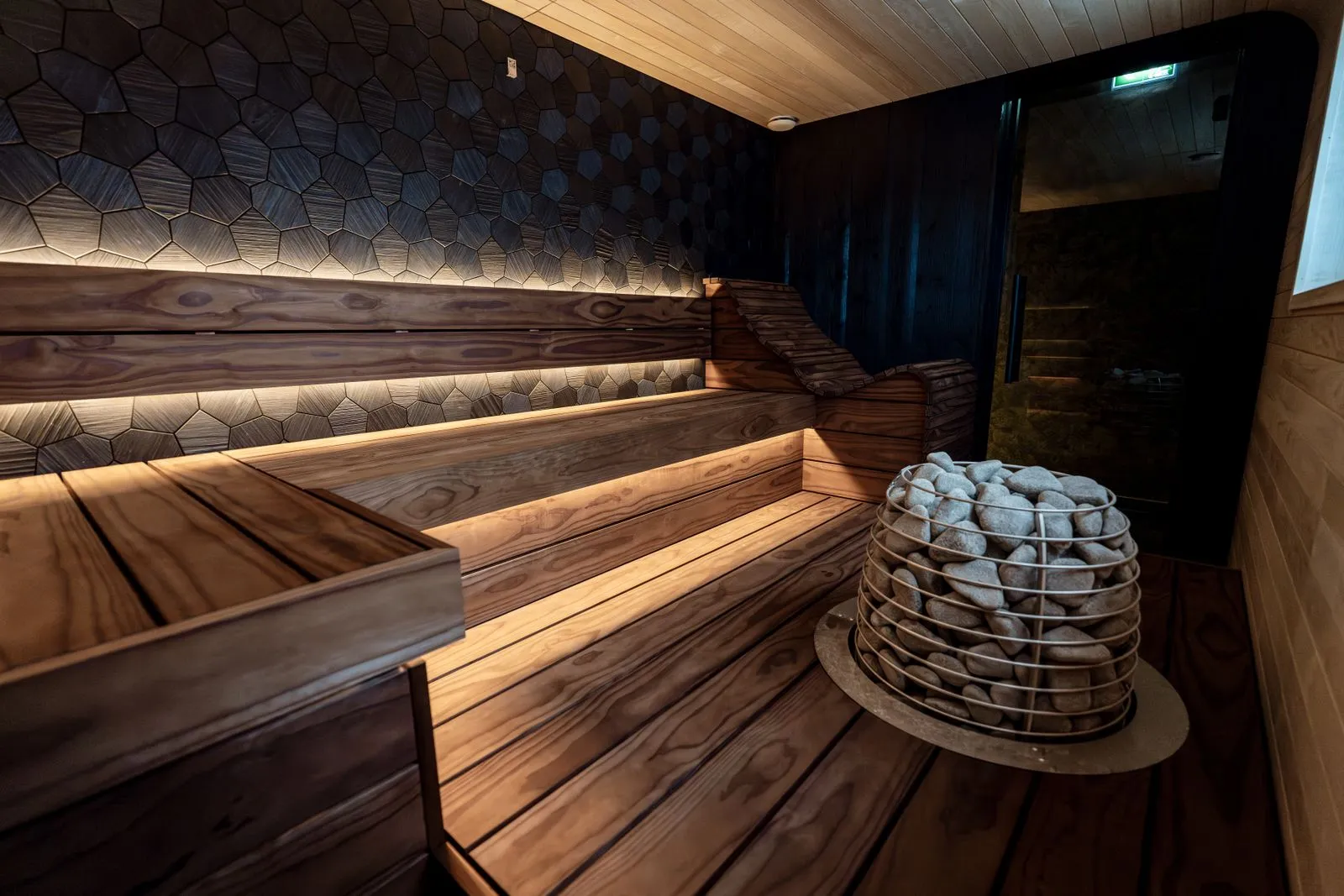
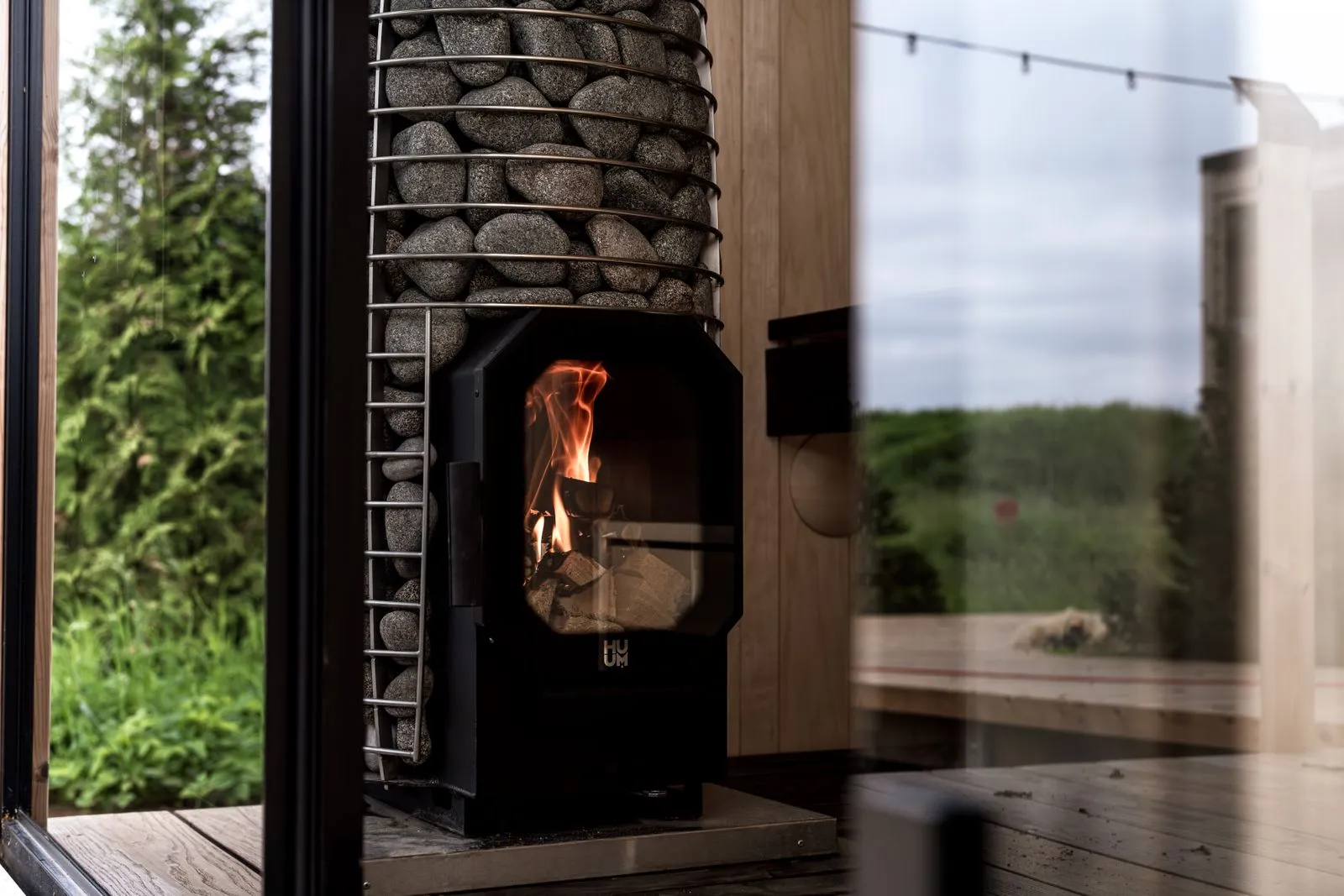
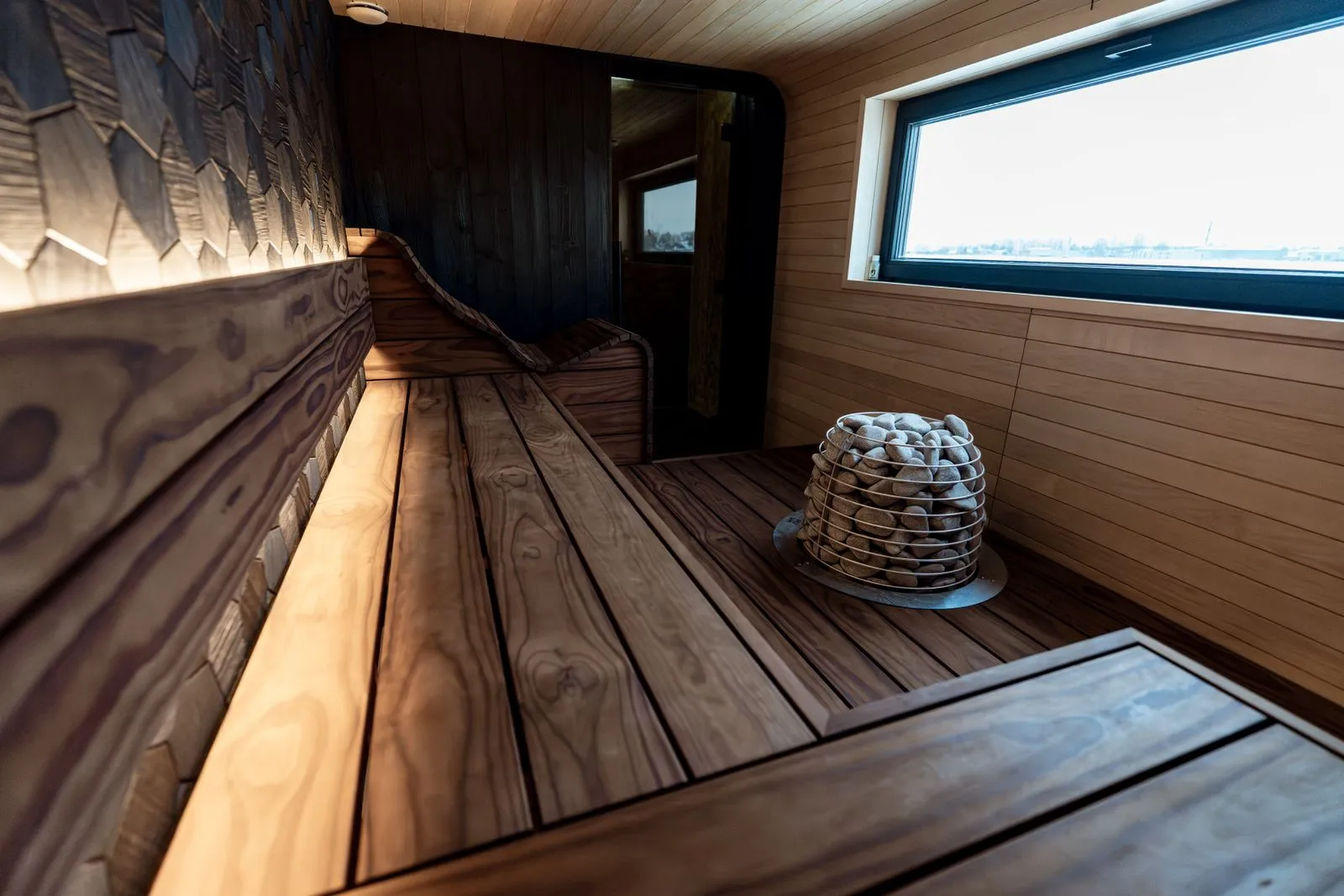
Larger, freestanding units that sit on the floor. They handle higher kilowatt outputs and hold more stones, making them the choice for big saunas.
Floor-standing
- Higher outputs for large rooms
- Bigger stone mass for soft löyly
- Often a centrepiece design
Trade-offs
- Takes up floor space
- Needs clear clearances all around
- Overkill for a small sauna
How to choose
Whichever you pick, the fundamentals do not change: size it to the room, respect the clearances and guard rail, and have it wired by a licensed electrician. Both styles make identical löyly when correctly sized and loaded with good stones.
Clearances and layout in practice
Whichever mounting style you choose, the clearances decide whether it fits your room comfortably. Wall-mounted heaters free the floor and suit compact layouts, but the wall must safely carry the weight and you still need the stated gaps to benches and side walls, plus a guard rail. Floor-standing units want clear space all around, so they suit rooms with room to spare rather than tight corners.
Plan the heater position together with the benches and the ventilation intake, not as an afterthought. The fresh-air inlet usually sits low near the heater so incoming air is drawn up over it, and the guard rail defines a safe zone bathers cannot cross. Sketching the layout before you buy — heater, clearances, guard rail, benches, and vents — quickly reveals whether a wall or floor unit is the natural fit for your particular room.
A useful rule of thumb: let the room decide rather than personal preference. Small and mid-size saunas up to roughly eight to ten cubic metres are well served by a wall-mounted unit that keeps the floor clear, while larger rooms — or anywhere you want a big stone mass and a strong central heater — point naturally to a floor-standing model. Match the mounting style to the space, and both deliver identical löyly when correctly sized and loaded.
Frequently asked questions
Should I get a wall-mounted or floor-standing sauna heater?
Wall-mounted suits most small and mid-size home saunas and saves floor space; floor-standing suits larger rooms, higher outputs and bigger stone loads. Room size usually decides.
Do floor-standing heaters make better löyly?
Not inherently, but they often hold more stones, and a larger stone mass gives softer, longer löyly. A well-loaded wall unit of the right size also performs excellently.
Can any wall support a wall-mounted heater?
The wall must safely carry the heater weight, and clearances to benches and walls must be met. Follow the manufacturer mounting instructions and use appropriate fixings.
Are floor-standing heaters only for big saunas?
They shine in large rooms and where you want a big stone mass, but smaller floor models exist. In a compact sauna a wall unit is usually the more space-efficient choice.
Does mounting style affect clearances?
Yes. Each style has its own minimum clearances to benches, walls and ceiling. Confirm them for your specific model before choosing a layout.
Can a wall-mounted heater go on any wall?
The wall must safely support the heater weight with appropriate fixings, and the stated clearances to benches and side walls must be met. Confirm the mounting instructions and clearances for your specific model before choosing a spot.
Do floor-standing heaters need clearance on all sides?
Yes — floor-standing units need the manufacturer clearances all around, which is why they suit larger rooms rather than tight corners. Always check the specific model requirements against your layout.
How do I plan heater placement?
Sketch the heater, its clearances and guard rail, the benches, and the low fresh-air intake together before buying. This reveals whether a wall or floor unit fits your room and keeps airflow and safety correct.
How do I decide between a wall and floor sauna heater?
Let the room size decide: small and mid-size saunas suit a space-saving wall unit, while larger rooms or those wanting a big stone mass suit a floor-standing model. Both make identical löyly when correctly sized and loaded.