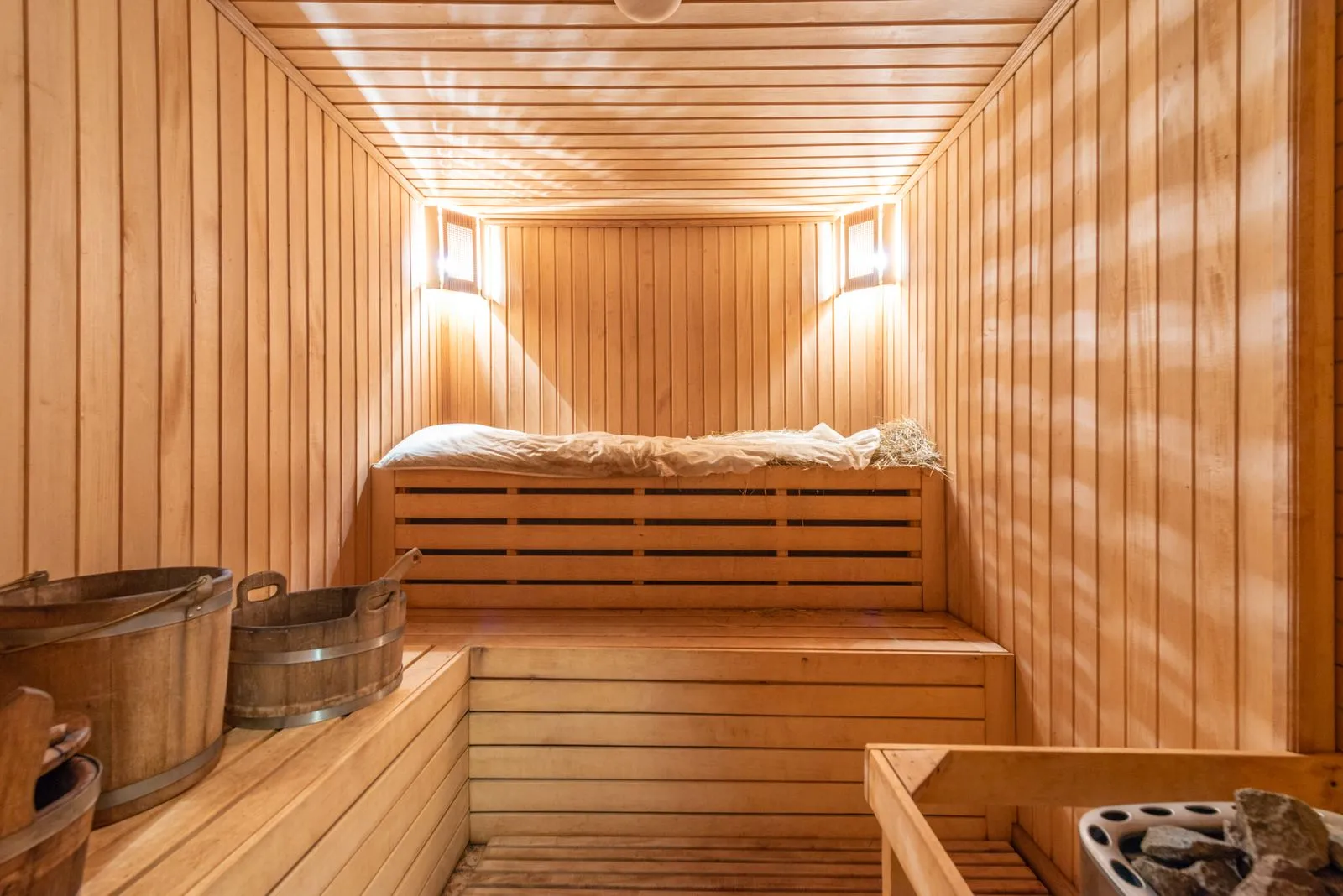
Dry Sauna vs. Wet Sauna: What Is the Difference?
Dry and wet sauna describe how much water you add — a traditional sauna does both, in cycles. Here is what the terms really mean and how they differ from steam rooms.
The short answer
“Dry sauna” and “wet sauna” mostly describe how much water you add to the stones. A traditional sauna does both — dry between löyly, briefly humid when you add water. True “wet” heat at near-100% humidity is a steam room, a different thing entirely.
The terms “dry sauna” and “wet sauna” cause a lot of confusion. In truth, a traditional sauna is both — the difference is simply how much water you throw on the stones. Here is what the labels mean.
What the terms mean
- Dry sauna — a traditional sauna used with little or no water, so the air stays hot and dry. Often just means a sauna run without much löyly.
- Wet sauna — a traditional sauna where more water is added to the stones for higher humidity and stronger löyly.
- Steam room — sometimes loosely called a “wet sauna”, but it is actually a different environment: near-100% humidity at a lower temperature, from a steam generator.
A traditional sauna does both
In a normal session you cycle between the two: sit in the dry heat, throw a ladle of water for a burst of humid löyly, let it fade, and repeat. That control — dry or wet, moment to moment — is a defining feature of the traditional sauna.
Where a steam room differs
| Dry/wet sauna | Steam room | |
|---|---|---|
| Temperature | 70–100°C | 40–50°C |
| Humidity | Your choice, via löyly | ~100%, constant |
| Heat source | Stove and stones | Steam generator |
The takeaway
So a “dry sauna” and a “wet sauna” are usually the same sauna used differently. Enjoy the control — that is the point of the stones and the ladle.
One sauna, your choice of steam
The most useful thing to understand is that a single traditional sauna is both a dry and a wet sauna, depending on how much water you add to the stones. Run it with little water and the air stays hot and dry; add more and you raise the humidity and the löyly. It is not two different machines — it is one sauna and your choice, moment to moment, of how much steam you want.
In a normal session you cycle between the two: sit in the dry heat, throw a ladle of water for a burst of humid löyly, let it fade, and repeat. That control is a defining feature of the traditional sauna, and it is exactly why the stones and the ladle matter so much.
The confusion arises because a steam room is sometimes loosely called a wet sauna, but it is a fundamentally different, always-wet environment — near-total humidity at a lower temperature, from a steam generator. If it is constant, thick, wet heat you want, that is a steam room; for the flexibility of dry or steamy heat in one room, any traditional sauna gives you both.
Frequently asked questions
What is the difference between a dry and wet sauna?
They mostly describe how much water you add to the stones. A traditional sauna is dry between löyly and briefly humid when you add water — so one sauna can be used either way. It is not two different machines.
Is a wet sauna the same as a steam room?
No. A "wet sauna" is a traditional sauna run with more löyly, still hot and only intermittently humid. A steam room is a different environment — near 100% humidity at a lower temperature from a steam generator.
Can a traditional sauna be both dry and wet?
Yes — that is the point. You control the humidity moment to moment by how much water you throw on the stones, cycling between dry heat and humid löyly in a single session.
Which is better, a dry or wet sauna?
Neither — it is a personal, in-the-moment choice within the same sauna. Some people prefer more löyly (wetter), others less (drier). The traditional sauna lets you have both.
Do I need a special sauna for wet heat?
No, for löyly-based wet heat any traditional sauna with stones works — just add more water. For constant, thick, low-temperature humidity, you would want a dedicated steam room instead.
What is the difference between a dry and wet sauna?
They mostly describe how much water you add to the stones. A traditional sauna is dry between löyly and briefly humid when you add water — so one sauna can be used either way. It is not two different machines.
Can one sauna be both dry and wet?
Yes — that is the point. You control the humidity moment to moment by how much water you throw on the stones, cycling between dry heat and humid löyly in a single session.
Is a wet sauna the same as a steam room?
No. A wet sauna is a traditional sauna run with more löyly, still hot and only intermittently humid. A steam room is a different environment — near-total humidity at a lower temperature from a steam generator.
Do I need a special sauna for wet heat?
No — for löyly-based wet heat, any traditional sauna with stones works; just add more water. For constant, thick, low-temperature humidity, you would want a dedicated steam room instead.