Why Sauna Stones Crack (and How to Avoid It)
Sauna stones crack from trapped water, thermal shock and the wrong rock type. Here is why it happens and how to choose and load stones that last.
The short answer
Sauna stones crack mainly because of trapped water flashing to steam inside porous rock, thermal shock from rapid heating and dousing, and using the wrong stone (porous or layered rock). Choosing dense, low-porosity sauna stones and loading them well prevents most cracking.
A cracked sauna stone is more than a nuisance — in a porous rock, trapped water can flash to steam and split the stone sharply. Understanding why stones crack tells you exactly how to avoid it.
The three causes
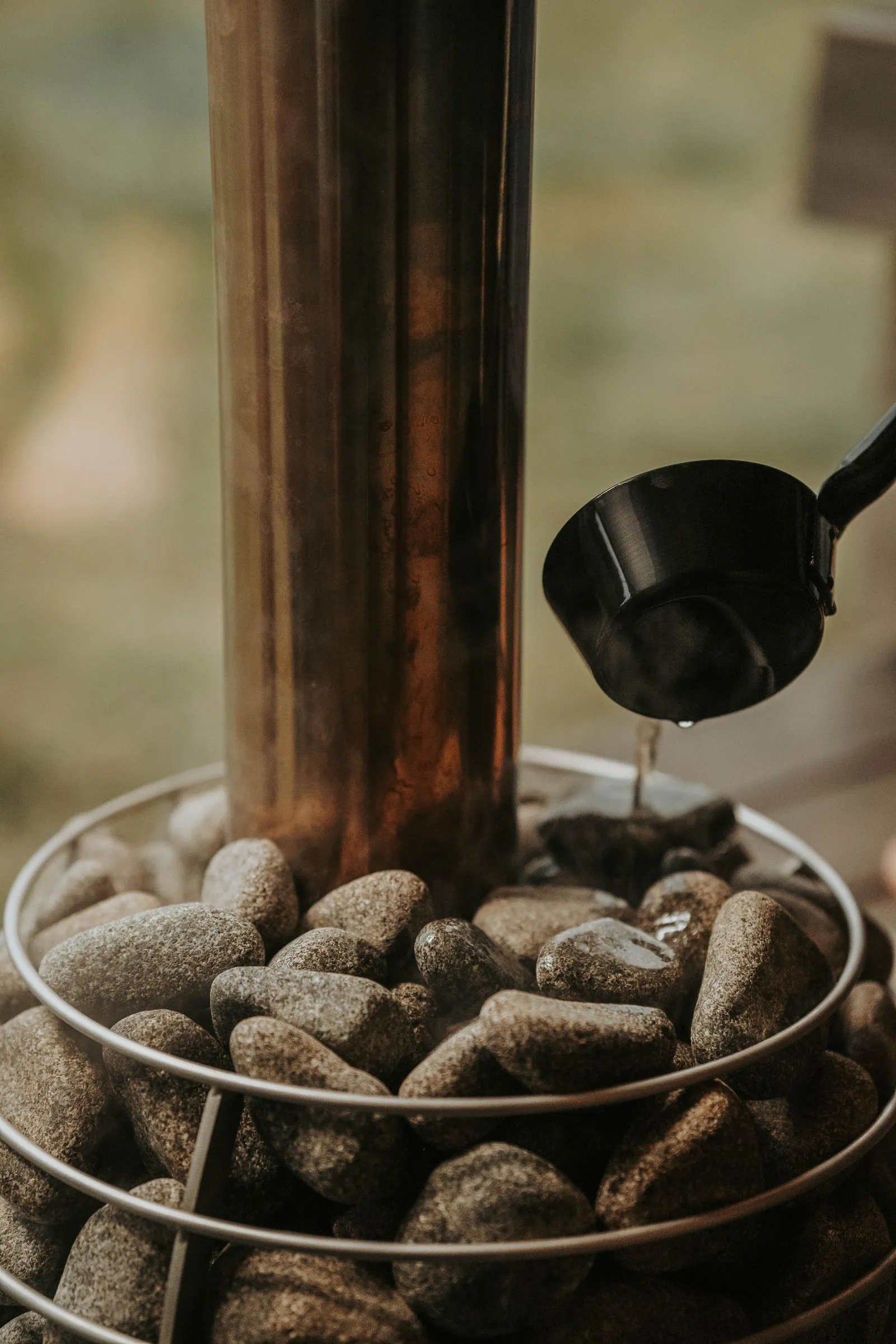
- Trapped water. Porous or water-worn rock holds moisture in tiny pores. Heated fast, that water turns to steam inside the stone and can crack or burst it.
- Thermal shock. Every stone endures rapid heating then cold-water dousing. Rock that is not shock-resistant fatigues and fractures over time.
- The wrong rock. Layered, mixed-mineral or quartz-bearing stones (like some granite) expand unevenly and split; sedimentary rock degrades.
How to avoid it
- Choose dense, low-porosity rock — olivine diabase, peridotite, or dense basalt. See the best sauna stones.
- Rinse and inspect new stones; skip any with visible cracks or layers.
- Stack loosely, large-to-small, so stones are not stressed and heat evenly — our stacking guide.
- Replace aging stones before they crumble, as covered in when to replace.
A normal amount of wear
Reducing cracking, and knowing what is normal
You cannot stop sauna stones from ever cracking — years of rapid heating and cold-water dousing eventually fatigues even the best rock — but you can avoid premature or dangerous cracking. It comes down to three choices: use dense, low-porosity stones sold for saunas rather than porous or water-worn rock; rinse and inspect new stones, discarding any with visible cracks or layers; and stack the pile loosely so stones heat evenly rather than being stressed against each other.
Knowing what is normal saves needless worry. A few hairline cracks appearing over months of use is ordinary wear, not a fault, and simply a signal to refresh the pile before those stones crumble and choke the airflow. What you want to avoid entirely is the sharp cracking or bursting of the wrong rock — porous, water-holding stones — which is a genuine hazard in a hot, enclosed room. Choose the right stone from the start and that risk disappears.
To keep cracking harmless rather than hazardous, the whole strategy is upstream: choose the right rock. Dense, low-porosity sauna stones develop only slow, harmless surface cracks over years, giving you plenty of warning to refresh the pile. Porous, water-holding rock is the opposite — it can crack sharply or burst without notice. Get the stone choice right at the outset and you remove the danger entirely, leaving only the gentle, predictable wear of good stone.
Frequently asked questions
Why do sauna stones crack?
Mainly because water trapped in porous rock flashes to steam inside the stone, plus thermal shock from rapid heating and dousing, and using the wrong (porous, layered or quartz-bearing) rock.
Can sauna stones explode?
Porous or water-worn stones can crack sharply or burst when trapped water turns to steam inside them. This is why you should only use dense, low-porosity stones sold for saunas.
How do I stop my sauna stones from cracking?
Use dense, low-porosity sauna stones like olivine diabase, rinse and inspect them, stack them loosely so they heat evenly, and replace aging stones before they crumble.
Is it normal for sauna stones to crack over time?
Yes. After years of heat cycling even good stones develop cracks — that is normal wear. The aim is to avoid premature cracking with the right rock and to refresh the pile in time.
Which rocks are most likely to crack in a sauna?
River and lakeshore stones, sedimentary rock like limestone and sandstone, and some quartz-bearing granite. Avoid these; use dense igneous sauna stones instead.
Can you completely prevent sauna stones from cracking?
No — years of heat cycling eventually fatigues even the best rock. But you can prevent premature or dangerous cracking by using dense, low-porosity sauna stones, inspecting them, and stacking loosely so they heat evenly.
Are a few cracks in sauna stones a problem?
A few hairline cracks over months of use are normal wear, not a fault — just a signal to refresh the pile before those stones crumble and choke the airflow. Sharp cracking or bursting of the wrong rock is the real hazard to avoid.
What makes the difference between safe and dangerous cracking?
The rock. Dense, low-porosity sauna stones develop harmless surface cracks over time; porous, water-holding rock can crack sharply or burst when trapped water flashes to steam. Using proper sauna stones removes the danger.
How do I make sure my sauna stones crack safely, not dangerously?
Choose dense, low-porosity stones sold for saunas. They develop only slow, harmless surface cracks over years, unlike porous water-holding rock which can crack sharply or burst. The right rock choice removes the danger entirely.