Sauna Stone Size: Why a Mix Works Best
The best sauna stone pile mixes sizes: large stones at the base for mass and airflow, smaller stones on top where water lands. Here is how to get it right.
The short answer
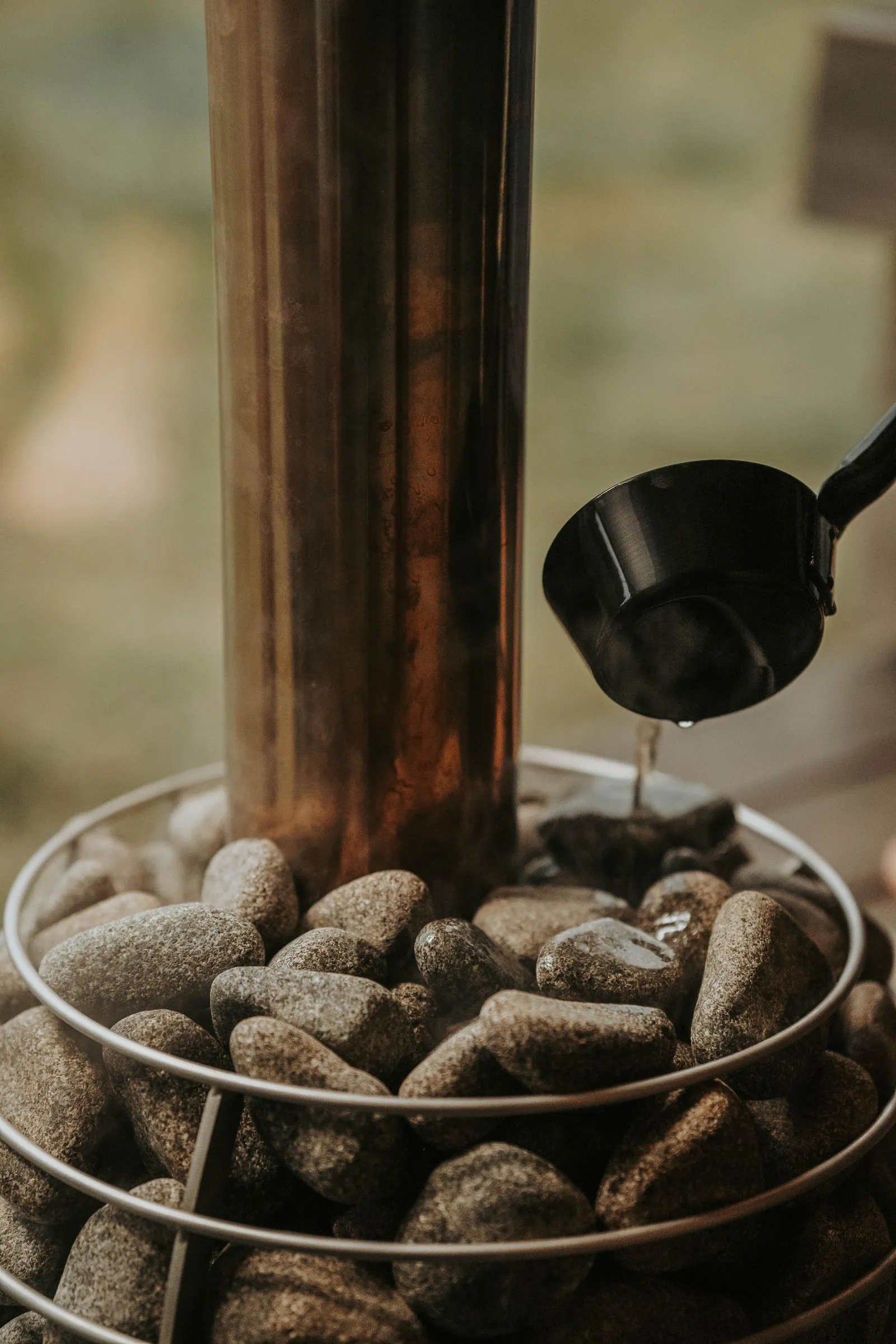
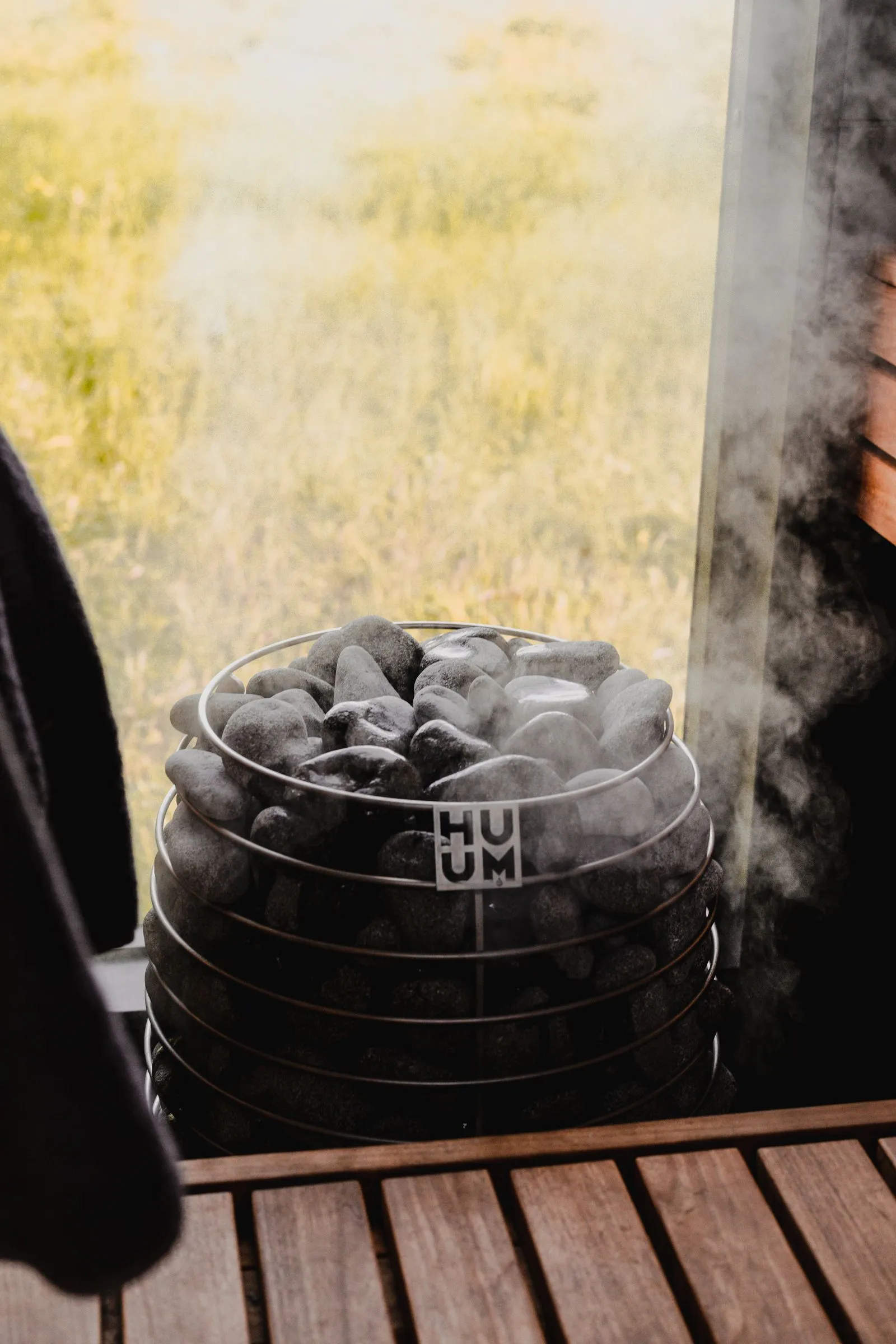
The best löyly comes from a mix of stone sizes: larger, fist-sized stones at the bottom for thermal mass and airflow, and smaller stones toward the top where water actually lands. All-tiny piles choke airflow; all-huge piles make coarse steam.
Stone size is a detail that quietly shapes how your sauna feels. Get the mix right and the löyly is soft and generous; get it wrong and the same heater underdelivers.
The principle
- Big stones at the base. Large, roughly fist-sized stones store the most heat and keep open air channels at the bottom, where air enters. On electric heaters they also sit around the elements.
- Smaller stones on top. Toward the top, where you throw water, smaller stones give more surface area for water to flash into steam.
- A graded mix in between. Working from large to small creates both mass and a breathing structure.
Why not all one size
A graded mix
- Good airflow at the base
- Strong thermal mass low down
- Fine surface area on top for steam
- Even, soft löyly
One size only
- All-small: chokes airflow, poor heat
- All-large: coarse, splashy steam
- Water runs through instead of vaporising
- Uneven heating
How it interacts with quantity
Loading the mix
Place the big stones first, grade up to smaller ones, and keep the whole pile loose with visible air gaps — the full method is in our stacking guide. Combine the right rock type, the right quantity, and a good size mix, and you have done everything the stones can do to give you a soft, strong steam.
Sorting and loading the mix
Sauna stones usually arrive in a range of sizes rather than pre-sorted, so a couple of minutes sorting them before loading pays off. Separate the larger, fist-sized stones from the smaller ones, then build from the bottom up: big stones at the base to store heat and keep the lowest air channels open, medium stones through the middle, and the smallest on top where you throw water and want plenty of surface area for it to flash to steam.
Keep the pile loose throughout, with visible gaps — if you cannot see air through it, it is packed too tight. The goal is a structure that breathes: air enters low, rises through the pile heating it evenly, and water hitting the top stones vaporises instantly. A well-graded, loosely stacked mix is the difference between a soft cloud of löyly rolling across the room and a weak, splashy hiss that barely registers.
Frequently asked questions
What size should sauna stones be?
A mix works best: larger, roughly fist-sized stones at the bottom for mass and airflow, and smaller stones toward the top where water lands. Avoid a pile that is all one size.
Do bigger or smaller sauna stones make better löyly?
Neither alone. Large stones store heat but make coarse steam; small stones give fine steam but choke airflow if used throughout. A graded mix gives the best, softest löyly.
Where do the small stones go in a sauna heater?
Toward the top, where you throw water, so their greater surface area flashes the water to steam. Larger stones go at the base for thermal mass and airflow.
Why does my sauna löyly feel weak or splashy?
Often the stone size or loading: all-large stones make coarse, splashy steam, and a packed pile lets water run through without vaporising. Use a graded mix, loosely stacked.
Do sauna stones come pre-sorted by size?
They usually come in a suitable range, but not sorted. Sort them large-to-small yourself before loading so you can build the pile from big at the base to small on top.
Do sauna stones come sorted by size?
Usually they come in a suitable range but not pre-sorted. Take a couple of minutes to separate larger from smaller stones before loading, so you can build the pile big at the base to small on top.
How can I tell if my stone pile is too tight?
If you cannot see air gaps through the pile, it is packed too tight. A well-built pile breathes — air enters low, rises to heat the stones evenly, and water on the top stones flashes instantly to steam.
Where do the biggest stones go?
At the base of the pile, where their mass stores heat and they keep the lowest air channels open. Grade up to the smallest stones on top, where you throw water and want maximum surface area for steam.