Ceramic vs. Natural Sauna Stones
Ceramic sauna stones offer consistency and long life; natural stones are traditional and inexpensive. Here is how the two compare and which to choose.

The short answer
Natural sauna stones (like olivine diabase) are traditional, inexpensive and proven; ceramic (engineered) stones offer very consistent shape and performance and can last longer, at a higher price. Both make good löyly when used correctly.
Most sauna stones are natural rock, but engineered ceramic stones have appeared as a premium alternative. Here is how the two compare.
Natural stones
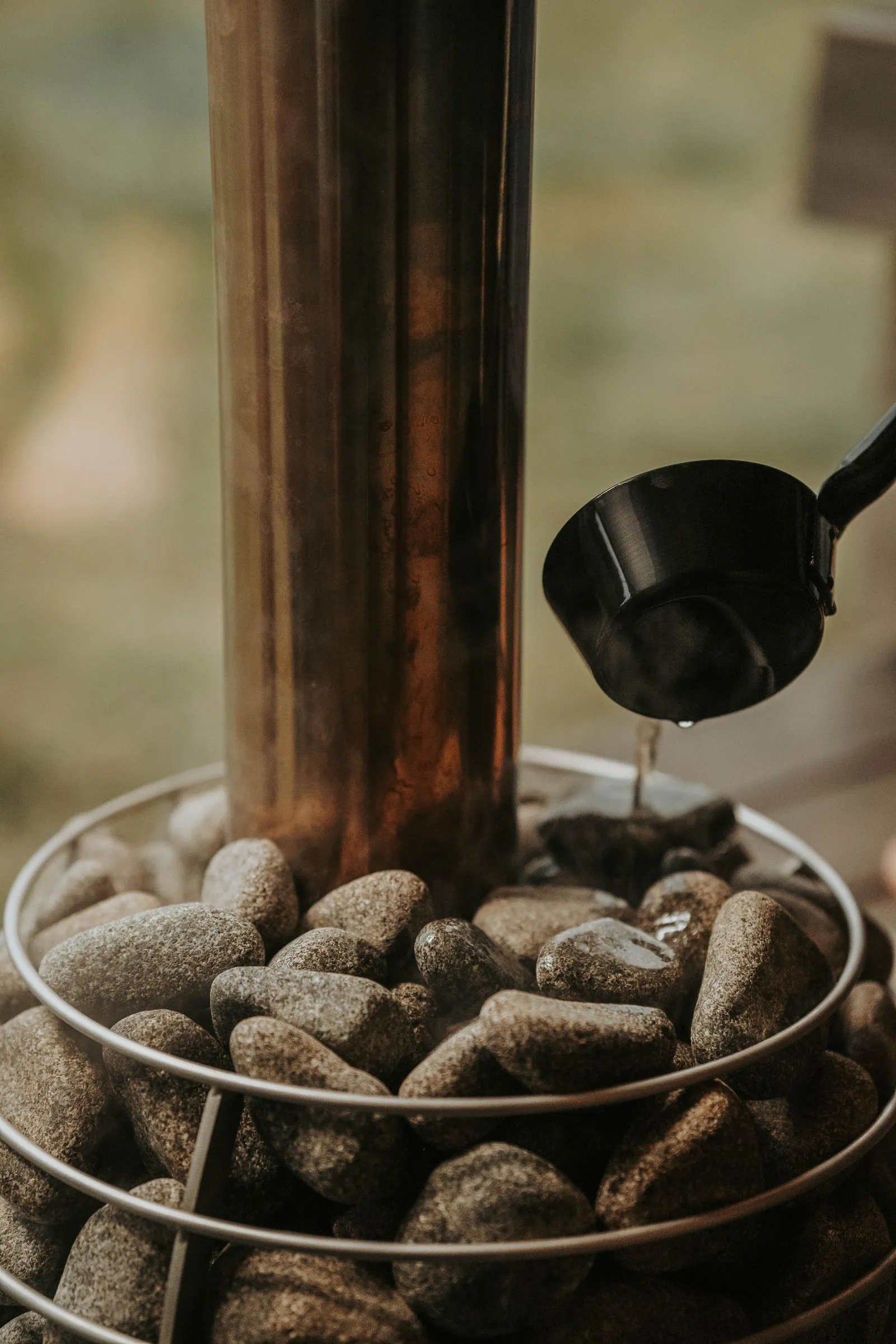
Quarried igneous rock — olivine diabase, peridotite, dense basalt — sold specifically for saunas. Time-tested, cheap, and widely available.
Natural stones
- Traditional and proven
- Inexpensive and easy to buy
- Excellent heat storage
- Authentic sauna feel
Trade-offs
- Vary in shape and quality
- Crack and degrade over years
- Need periodic replacement
Ceramic / engineered stones
Manufactured to a consistent shape and composition, designed for uniform heat and long life.
Ceramic stones
- Very consistent shape and airflow
- Predictable, even performance
- Often long-lasting
- No porous surprises
Trade-offs
- More expensive
- Less traditional
- Availability varies by brand
How to choose
| Priority | Better choice |
|---|---|
| Lowest cost | Natural |
| Tradition | Natural |
| Consistency & longevity | Ceramic |
| Predictable airflow | Ceramic |
Either way, the basics apply
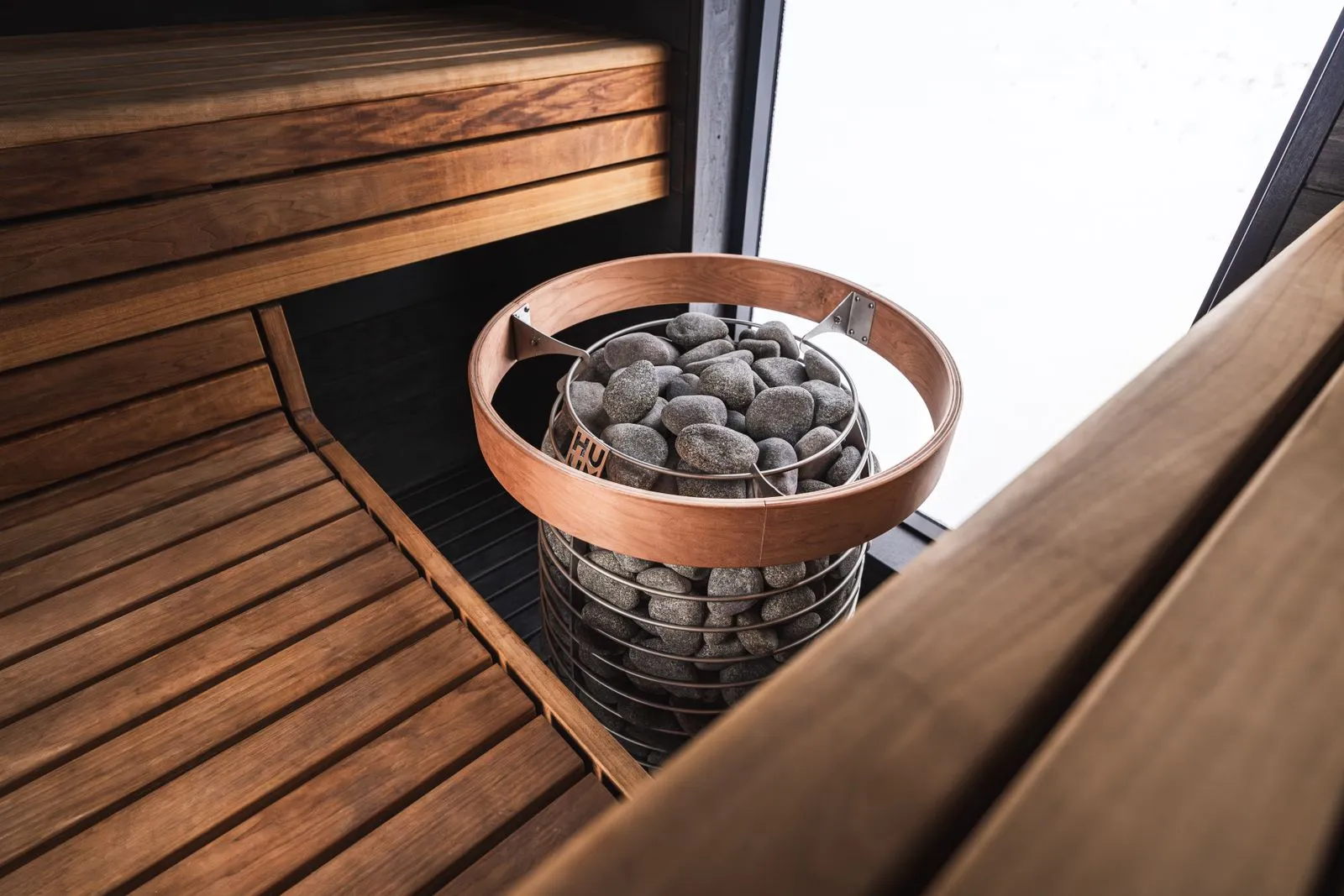
Whichever you choose, fill to the heater capacity, stack loosely large-to-small, and keep the airflow open. The rock type sets the ceiling; good loading is what actually delivers the löyly. See our overview of the best sauna stones for the full field.
Matching the choice to your priorities
For most people, quality natural stones such as olivine diabase are the sensible, economical choice — cheap, proven, widely available, and excellent at making löyly. Ceramic (engineered) stones earn their higher price where consistency and longevity are the priority: their uniform shape gives very predictable airflow and heat, and they often last longer between refreshes, which can appeal for a heavily used or commercial sauna.
Whichever you choose, the loading fundamentals are identical and decide the actual result: fill to the heater rated capacity, stack loosely from large at the base to small on top, and keep airflow open. The rock or ceramic sets the ceiling on performance; good loading is what delivers it. If budget and tradition lead your thinking, go natural; if you value maximum consistency and longer intervals between refreshes and do not mind paying more, ceramic is a fair upgrade. Both, loaded well, make a fine sauna.
In practice, the decision rarely comes down to performance, since both types make an excellent löyly when loaded well — it comes down to priorities and budget. Natural stones win on cost, tradition and availability; ceramic stones win on consistency and longevity. Decide which of those matters most for your sauna, and either choice, loaded to capacity and stacked loosely for airflow, will serve you well for years.
Frequently asked questions
Are ceramic sauna stones better than natural ones?
Ceramic stones offer more consistent shape and performance and can last longer, but cost more and are less traditional. Quality natural stones like olivine diabase perform excellently and are cheaper. Both work well.
Do ceramic sauna stones last longer?
Often yes — engineered stones are made for durability and even performance, so they can go longer between refreshes than natural rock, though at a higher upfront price.
Are natural sauna stones good enough?
Yes. Dense, low-porosity natural stones such as olivine diabase are the proven, economical standard and make excellent löyly. Ceramic is an optional premium upgrade.
Can you mix ceramic and natural sauna stones?
It is generally best to use one type as intended, following the heater guidance. If mixing, keep the pile loose and to capacity, and ensure any natural stones are dense and non-porous.
Which is cheaper, ceramic or natural sauna stones?
Natural stones are cheaper and widely available. Ceramic stones cost more but offer consistency and potentially longer life. Choose based on budget and priorities.
Are natural sauna stones good enough for most people?
Yes — quality natural stones like olivine diabase are the proven, economical standard and make excellent löyly. Ceramic stones are an optional premium upgrade for those who want maximum consistency and longer life.
Do ceramic and natural stones load the same way?
Yes — for both, fill to the heater rated capacity, stack loosely from large at the base to small on top, and keep airflow open. Good loading delivers the performance the stone type makes possible.
When are ceramic stones worth the extra cost?
When consistency and longevity matter most — for example a heavily used or commercial sauna. Their uniform shape gives predictable airflow and they often last longer between refreshes, at a higher upfront price.
Do ceramic or natural sauna stones make better löyly?
Both make an excellent löyly when loaded well, so the choice is about priorities, not performance. Natural stones win on cost and tradition; ceramic on consistency and longevity. Load either to capacity and stack loosely for airflow.