Single-Wall vs. Double-Wall Saunas
Single-wall saunas are simpler and cheaper; double-wall saunas add insulation for better heat retention in cold climates. Here is how they compare.
The short answer
Single-wall saunas (like most barrels) are simpler and cheaper but rely on the wood thickness for insulation; double-wall saunas add a proper insulated cavity for better heat retention — a real advantage in cold, exposed Canadian sites. Choose simplicity and cost, or cold-climate performance.
How a sauna wall is built has a direct effect on how well it holds heat, which matters most in a cold climate. The choice is between the simplicity of a single wall and the insulation of a double wall.
Single-wall saunas
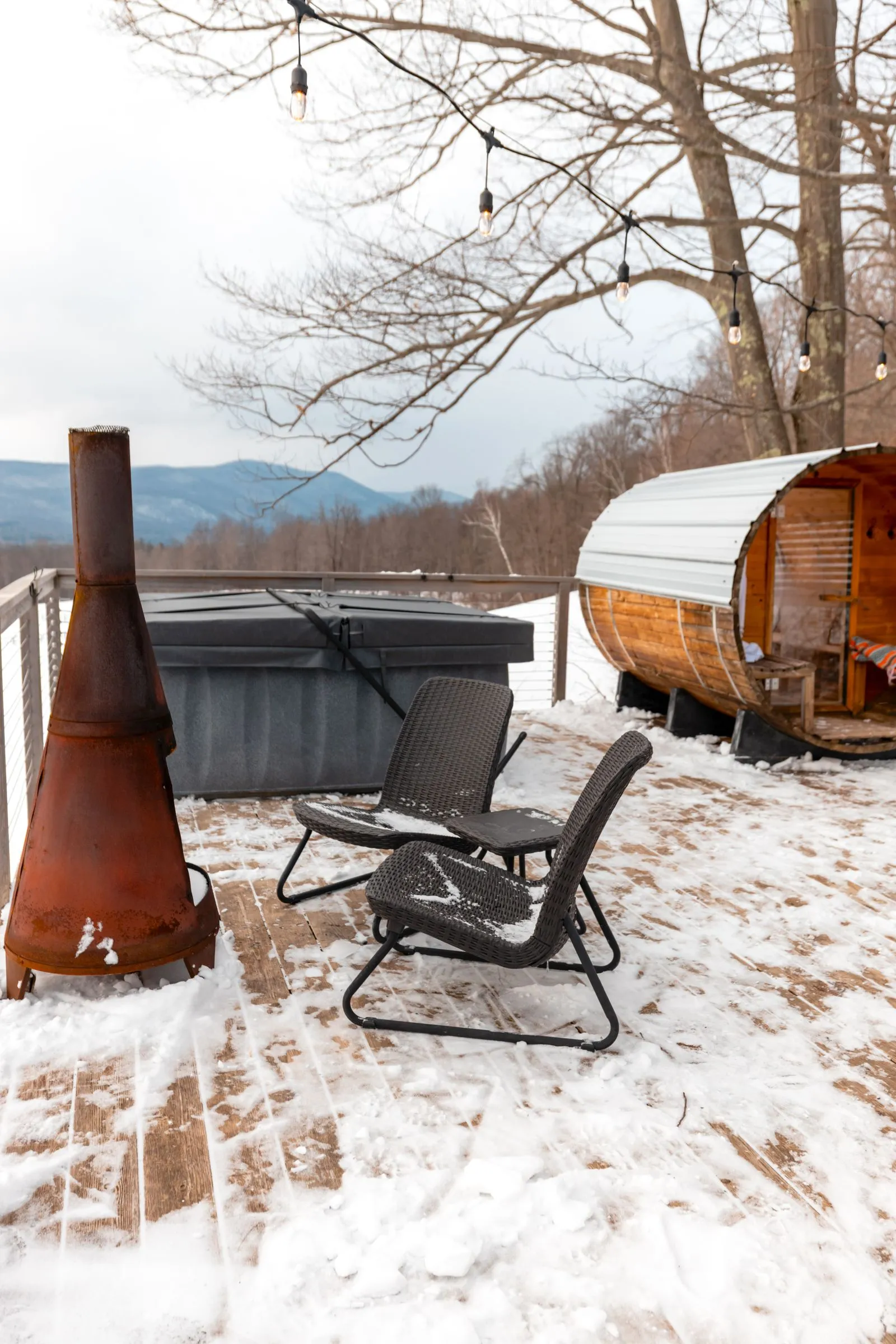
Common in barrels and some budget cabins, single-wall construction relies on the thickness of the solid wood for its insulation, without a separate insulated cavity.
Single-wall
- Simpler and cheaper
- Thick staves give decent heat retention
- Fine in milder climates
- Fewer materials
Trade-offs
- Less insulation than a double wall
- Loses more heat in extreme cold
- Slower to hold temperature on very cold nights
Double-wall saunas
Double-wall construction adds an insulated cavity — mineral wool, a foil vapour barrier, and an air gap — between an outer and inner skin, as covered in our insulation guide.
Double-wall
- Better heat retention
- Faster to reach and hold temperature
- Ideal for cold, exposed sites
- Lower running cost in winter
Trade-offs
- More expensive to build
- Heavier and more materials
- More involved construction
Which for the Canadian climate?
The bottom line
Choose single-wall for simplicity and lower cost, accepting more heat loss in extreme cold — often the sensible choice for a barrel or a milder climate. Choose double-wall for the best cold-climate performance and lower winter running costs, at a higher build cost. Either way, a tight door seal and good ventilation matter alongside the walls. For the fuller build picture, see our guides to insulation and outdoor sauna buying.
The cold-climate calculation
In a mild climate the difference between single and double-wall construction is modest, but in the Canadian cold it becomes a real calculation. A double-wall sauna heats faster and holds temperature far better on a bitter night, so it uses less energy per session and is more pleasant to use in deep winter — the payback for its higher build cost grows the colder and more exposed your site is.
That said, a thick-staved single-wall barrel, well sealed, performs perfectly well for many owners, and its lower cost and simplicity are genuine advantages. The honest guidance is to weigh your climate and how much you will use the sauna in winter: for an exposed, very cold site and heavy winter use, double-wall earns its cost; for a milder climate, occasional use, or a tight budget, a good single-wall build is a sensible choice. Either way, insulation quality, a tight door seal and good ventilation matter alongside the wall construction itself.
Frequently asked questions
What is the difference between single-wall and double-wall saunas?
Single-wall saunas rely on the wood thickness for insulation, without a separate cavity; double-wall saunas add an insulated cavity with mineral wool, a vapour barrier and an air gap for better heat retention.
Are double-wall saunas better for cold climates?
Yes — a double-wall insulated sauna heats faster and holds temperature far better on a very cold night, so it earns its cost in much of Canada, where a sauna is at its best in deep winter.
Are barrel saunas single or double wall?
Most barrels are single-wall, relying on the thickness of their solid staves for insulation. Thicker staves hold heat better; for extreme cold, a well-insulated double-wall cabin has an edge.
Is single-wall construction good enough for a sauna?
It can be, especially with thick staves and careful sealing in milder climates. But it loses more heat in extreme cold and holds temperature less well than a double-wall build.
Is a double-wall sauna more expensive?
Yes — it uses more materials and more involved construction, so it costs more to build. The payoff is better heat retention and lower running cost, especially in cold climates.
Does wall construction affect running cost?
Yes — a better-insulated double wall loses less heat, so the heater runs less and the sauna is cheaper to run, particularly in winter. Single-wall saunas lose more heat in the cold.
Is double-wall construction worth it in a cold climate?
The colder and more exposed your site and the more you use the sauna in winter, the more a double wall pays back — it heats faster, holds temperature better, and uses less energy per session. For milder climates or tight budgets, a good single-wall build is sensible.
Can a single-wall sauna work in winter?
Yes — a thick-staved, well-sealed single-wall barrel performs well for many owners, though it loses more heat than a double wall in extreme cold. Insulation quality, a tight door seal and good ventilation matter alongside the wall construction.