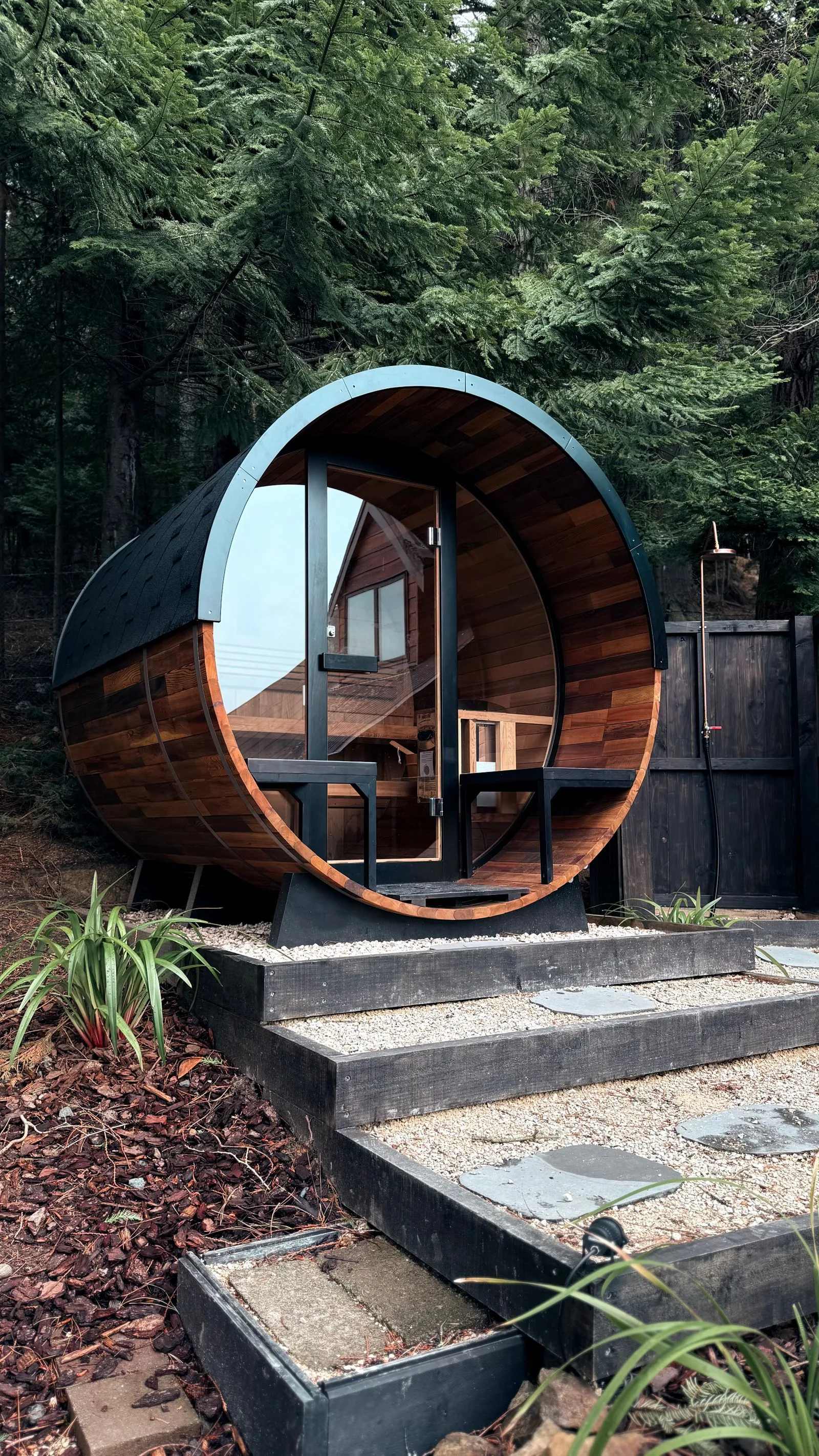
Gravel vs. Concrete Sauna Foundation
A gravel pad drains well and is forgiving; a concrete slab or piers are solid and permanent. Here is how to choose a foundation for an outdoor sauna.

The short answer
A gravel pad drains superbly, is forgiving and cheaper — ideal for most barrels and cabins. Concrete (a slab or piers) is solid and permanent, better for heavy or permanent builds and sloping ground, but drains less and costs more. Both must be level.
The foundation keeps an outdoor sauna level, dry and rot-free. For most builds the choice comes down to a gravel pad or concrete.
Gravel pad
Compacted gravel, slightly larger than the sauna footprint.
Gravel pad
- Excellent drainage
- Forgiving and adjustable
- Cheaper and quicker
- Ideal for barrels and most cabins
Trade-offs
- Less rigid than concrete
- Can need occasional re-levelling
- Not for very heavy permanent builds
Concrete (slab or piers)
A poured slab, or concrete piers for point support.
Concrete
- Solid, permanent and rigid
- Piers handle sloping ground
- Good for heavy or permanent builds
- Very level and stable
Trade-offs
- Drains less than gravel
- More cost and effort
- Permanent — harder to change
How to choose
| Situation | Better choice |
|---|---|
| Barrel or typical cabin | Gravel pad |
| Sloping ground | Concrete piers |
| Heavy / permanent build | Concrete slab |
| Best drainage, lowest cost | Gravel pad |
What both must do
Both foundations serve a sauna well; the decision is drainage and cost (gravel) versus rigidity and permanence (concrete). See our foundations guide for preparation detail.
Matching the base to the site
The right foundation depends mostly on your ground and how permanent the build is. A compacted gravel pad drains superbly, is forgiving and adjustable, and costs less — the sensible default for most barrels and typical cabins. Concrete, whether a poured slab or piers, is solid, rigid and permanent, better suited to heavy or permanent builds and, in the case of piers, to sloping or soft ground.
The trade-off is drainage versus rigidity. Gravel drains naturally, which matters in the Canadian climate where water pooling and freezing under a sauna can heave the base; concrete is very stable but drains less, so you must ensure water runs away from it. Both must be level and must keep the sauna off wet ground.
For most backyard saunas, a gravel pad is the practical choice — cheaper, better-draining and easy to build. Reach for concrete piers on sloping ground, or a slab for a heavy, permanent installation where maximum rigidity is the priority. Confirm the requirement with your supplier before delivery.
Frequently asked questions
Is gravel or concrete better for a sauna foundation?
A gravel pad drains superbly, is forgiving and cheaper — ideal for most barrels and cabins. Concrete (a slab or piers) is solid and permanent, better for heavy builds and sloping ground, but drains less and costs more.
Can you put an outdoor sauna on a gravel pad?
Yes — a compacted, level gravel pad is a common and excellent foundation for barrels and most cabins. It drains well and is forgiving to build, provided it is level and keeps the sauna off wet ground.
When should you use a concrete foundation for a sauna?
For heavy or permanent builds, on sloping or soft ground (using piers), or where maximum rigidity is wanted. Concrete is solid and very stable but drains less and costs more than gravel.
Does a sauna foundation need to drain?
Yes. Standing water under a sauna invites rot and, in winter, freeze heave. Gravel drains naturally; with concrete, ensure water runs away from the structure. Both must be level.
Which foundation is cheaper for a sauna?
A gravel pad is generally cheaper and quicker than pouring concrete, while also draining better. Concrete costs more but offers rigidity and permanence for heavy builds.
Is gravel or concrete better for a sauna foundation?
A gravel pad drains superbly, is forgiving and cheaper — ideal for most barrels and cabins. Concrete (a slab or piers) is solid and permanent, better for heavy builds and sloping ground, but drains less and costs more.
Does a gravel foundation drain better than concrete?
Yes — gravel drains naturally, which matters in the Canadian climate where water pooling and freezing under a sauna can heave the base. With concrete, you must ensure water runs away from it.
When should you use concrete for a sauna foundation?
For heavy or permanent builds, on sloping or soft ground (using piers), or where maximum rigidity is wanted. Concrete is very stable but drains less and costs more than a gravel pad.
Which foundation is cheaper for a sauna?
A gravel pad is generally cheaper and quicker than pouring concrete, while also draining better. Concrete costs more but offers rigidity and permanence for heavy builds.