Sauna Bench Design and Heights
Good sauna benches use cool, knot-free wood at the right heights and widths, with airflow gaps. Here is how to design benches that are comfortable and safe.
The short answer
Good sauna benches use cool, knot-free wood (aspen, alder or clear cedar), set at tiered heights so bathers can choose their heat, wide enough to sit or lie on, with gaps for drainage and airflow and a removable design for cleaning.
Benches are where you actually spend your time in a sauna, so their design affects comfort more than almost anything. The good news is the principles are simple.
Height and tiers
Heat rises, so height controls how hot you are. A well-designed sauna has at least two tiers:
- Upper bench — hottest, near the ceiling; the main seat for experienced bathers.
- Lower bench — cooler, and a step up to the top; good for beginners and for resting feet.
A common arrangement places the upper bench high enough that a seated bather head is in the hottest zone, with the lower bench roughly a comfortable step below.
Width and depth
Materials
Use cool-to-the-touch, low-resin, knot-free wood — aspen and alder are ideal, as is clear cedar. Knots conduct heat and get hot against skin. See our interior wood guide.
Airflow, drainage and cleaning
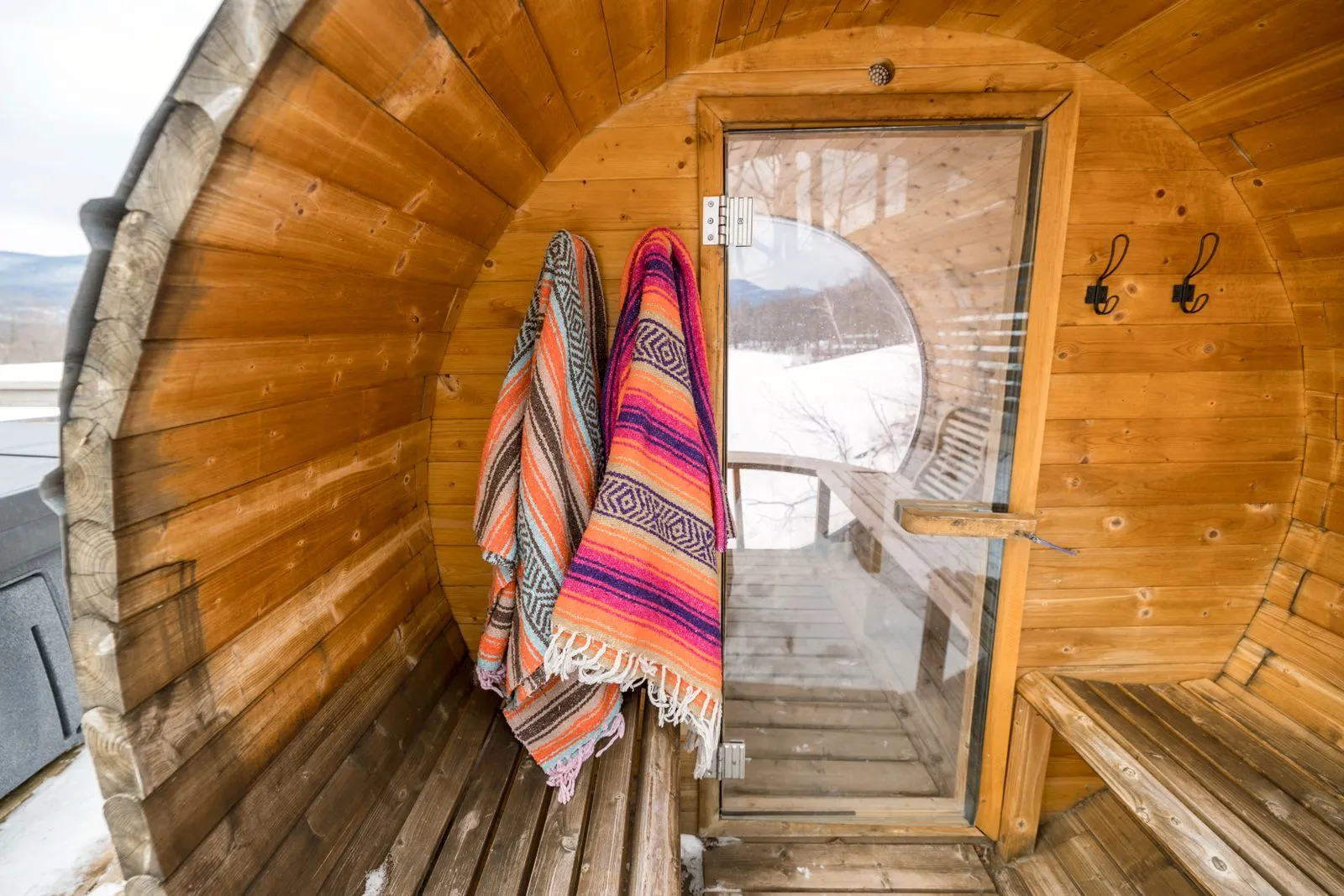
- Gap the boards slightly for drainage and airflow.
- Keep the framing simple so the whole bench lifts out for cleaning.
- Leave the wood bare — no film finish; a food-safe sauna oil is the only acceptable treatment.
Get the heights, width, materials and airflow right, and the benches disappear into the experience — cool underneath you, comfortable to sit or lie on, and easy to keep clean.
Comfort details that make a difference
Small design choices decide how comfortable a bench actually is. A gently sloped backrest turns an upright bench into a place you settle into; rounded front edges are kinder on the backs of your legs than sharp corners; and a top bench deep enough to sit cross-legged or recline transforms the experience for those who like to lie down. Because heat rises, the height of the top bench relative to the ceiling is what puts a seated bather in the hottest, most rewarding zone.
Practicality matters as much as comfort. Space the boards slightly for drainage and airflow, keep the framing simple so the whole bench lifts out for cleaning and drying underneath, and use cool, knot-free wood so the surface never gets uncomfortably hot against skin. Leave the wood bare — a food-safe sauna oil on benches is the only acceptable treatment. Get the heights, depth, edges and materials right, and the benches quietly disappear into a comfortable, easy-to-keep sauna.
Frequently asked questions
How high should sauna benches be?
Tiered: an upper bench high enough that a seated bather is in the hottest zone near the ceiling, and a lower bench roughly a comfortable step below for cooler heat and resting feet.
What wood should sauna benches be made of?
Cool-to-the-touch, low-resin, knot-free wood — aspen, alder or clear cedar. Knots conduct heat and get hot against skin, so clear boards are best.
How deep should a sauna bench be?
Deep enough to sit comfortably with feet on the lower bench, and ideally deep enough on the top tier to lie down if space allows. Many bathers prefer to recline.
Should sauna benches be sealed or treated?
Left bare, or treated only with a food-safe sauna oil on the surface. Never use varnish or polyurethane, which get hot, can off-gas and blister at sauna temperatures.
Why are there gaps between sauna bench boards?
For drainage and airflow — so sweat and water drain away and the wood dries between uses. It also keeps the benches lighter and easier to lift out for cleaning.
What makes a sauna bench comfortable?
A gently sloped backrest, rounded front edges, a top bench deep enough to sit cross-legged or recline, and a height that puts a seated bather in the hottest zone near the ceiling. Cool, knot-free wood keeps the surface comfortable against skin.
Should sauna benches be removable?
Ideally yes — keep the framing simple so the whole bench lifts out for cleaning and drying underneath, a common hidden source of smell. Removable benches are far easier to keep hygienic.
Do you seal sauna bench wood?
No — leave it bare so it breathes, with a food-safe sauna oil the only acceptable treatment. Never use varnish or film finishes, which get hot, can off-gas and blister at sauna temperatures.